
Exclusive: Why Senegal’s 14-minute walk-off never mattered in CAS’s AFCON 2025 ruling against Morocco
For months, fans believed Senegal’s 14-minute walk-off nearly handed Morocco the AFCON 2025 trophy on a technicality. Yet, according to independent sports law adviser Sarah Zahraoui-Sekour in an exclusive interview with Foot Africa, the clock never mattered to the Court of Arbitration for Sport (CAS).
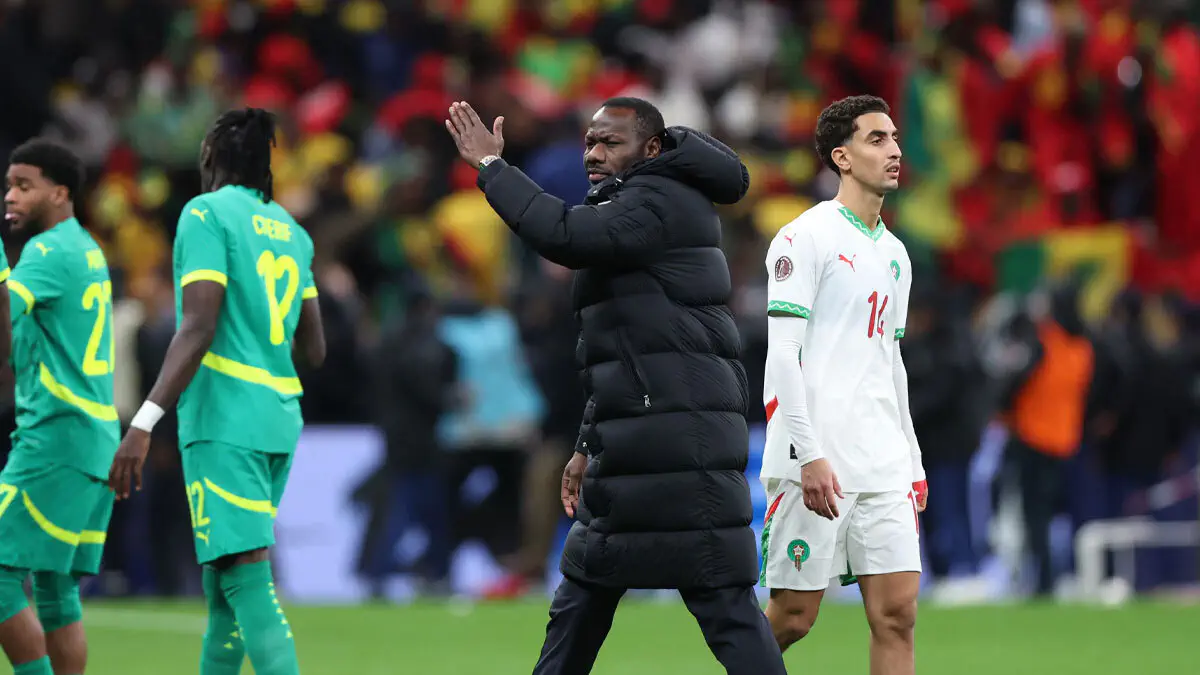
The dispute followed Senegal's temporary departure from the pitch during January's final against Morocco, after the hosts were awarded a late penalty.
Although Senegal returned and secured a 1-0 victory after extra time, CAF's Appeal Board subsequently awarded Morocco a 3-0 win by forfeiture in March.
That decision was overturned by the Court of Arbitration for Sport (CAS) on 24 November, restoring Senegal's continental title.
Read Also: Every AFCON winner from 2006 to 2025 after CAS reinstates Senegal as Champions
The 14-minute walk-off: Why the clock never mattered
Asked whether the length of Senegal's protest could legally justify forfeiting the final, Zahraoui-Sekour delivered a striking clarification.
"To be accurate, there's no '14-minute principle'. The 14 minutes are what everyone remembers, but legally, the clock was never the question," she told Foot Africa.
The legal adviser explained that neither FIFA's disciplinary framework nor Articles 82-84 of the AFCON regulations establish a specific duration after which temporarily leaving the pitch automatically results in defeat.
She highlighted an important distinction involving Article 83.
"The only time limit in those articles is the 15-minute tolerance in Article 83, and it covers a team that fails to turn up at kick-off."
That provision, she explained, concerns a different situation entirely.
"Under both readings argued in this case, the length of the walk-off did not matter."
Why the referee's whistle changed the legal outcome
Zahraoui-Sekour identified referee Jean-Jacques Ngambo Ndala's authority as central to the dispute.
"The match is the referee's call," she explained.
Under Law 5 of the Laws of the Game, referees have authority over whether matches are suspended, restarted, or abandoned.
This principle became decisive when Ndala allowed both teams to resume playing.
In its official 24 November ruling, CAS determined that Articles 82 and 84 applied to situations in which a team's conduct caused a match to be permanently abandoned.
Because the referee restarted the final and allowed it to reach a sporting conclusion, the arbitration panel found those provisions inapplicable.
The legal clash came down to two opposing interpretations of Article 82:
- Morocco’s argument: Leaving the pitch without permission automatically triggers a 3-0 forfeiture
- CAS’s ruling: A temporary protest is legally distinct from a permanent abandonment once the referee resumes play
"The whole case turned on that difference," Zahraoui-Sekour explained.
Why Pape Thiaw’s $100,000 fine didn’t cost Senegal the trophy
Crucially, restoring the title did not erase Senegal's disciplinary record.
"Leaving the pitch is misconduct, whatever the motive," Zahraoui-Sekour stressed.
CAS left intact CAF's separate sanctions, including coach Pape Thiaw’s five-match ban and $100,000 fine, confirming that a team can be punished for misconduct without losing a completed match.
The post-Rabat IFAB crackdown: Why future walk-offs mean red cards
Following the chaos in Rabat, the International Football Association Board (IFAB) approved strict Law changes in April 2026. While these rules do not apply retroactively to Senegal, competitions can now issue straight red cards to players who walk off in protest, and enforce automatic forfeits if a walk-off forces an abandonment.
"These rules came too late for Rabat, but the message is clear: a walk-off can now cost far more than a yellow card," Zahraoui-Sekour warned.
Morocco's remaining legal options are a separate issue, with Zahraoui-Sekour previously explaining exclusively to Foot Africa why a successful Swiss challenge would not automatically return the title.



Africa
Today at 11:38
AFCON
Today at 04:00

Africa
Yesterday at 11:20

AFCON
Yesterday at 08:37

Africa
26 November 2026

Africa
26 November 2026

Africa
25 November 2026

Exclusive
25 November 2026
AFCON
Today at 04:00

AFCON
13 November 2026

AFCON
13 November 2026
Interviews
12 November 2026

AFCON
10 November 2026