
Accommodating over 94,000 spectators.. The 5 biggest stadiums to host the Africa Cup of Nations in history
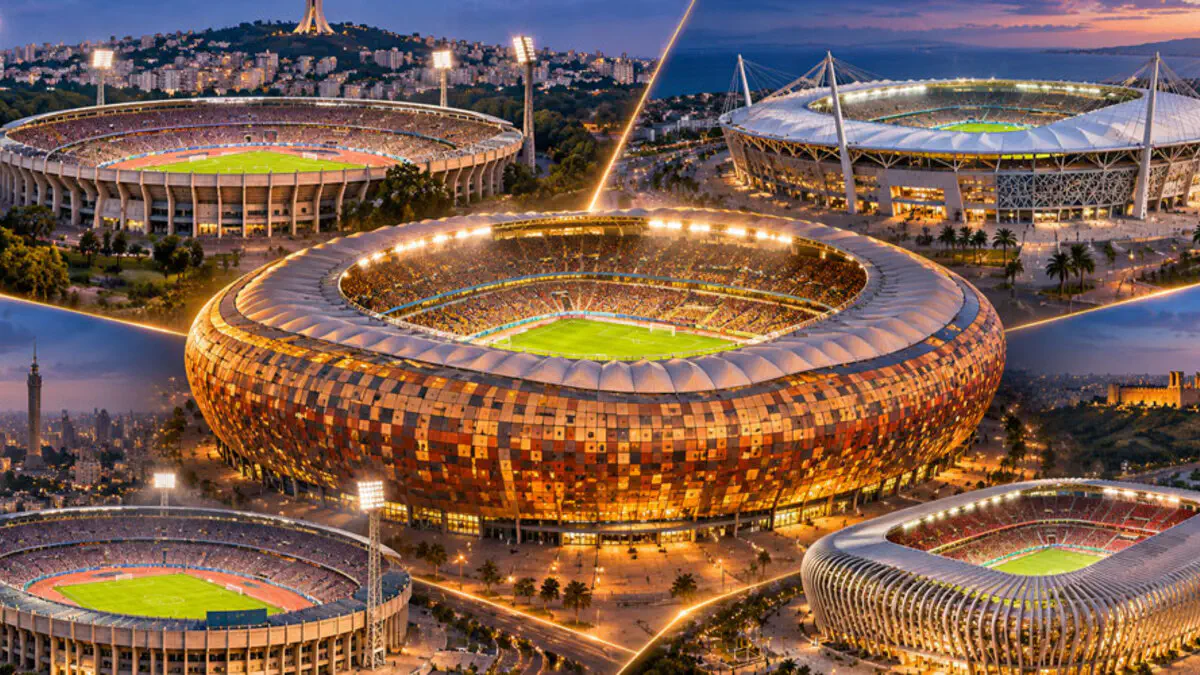
The Africa Cup of Nations has produced some of football's most unforgettable moments, but several of those memories are inseparable from the enormous stadiums that witnessed them.
From South Africa's first continental triumph in Johannesburg to Algeria's historic victory on home soil in 1990, Africa's largest football arenas have provided the stage for extraordinary sporting achievements.
Morocco's hosting of the 2025 tournament added another chapter introducing newly developed stadiums capable of accommodating more than 70000 spectators.
But which are the five biggest stadiums to have hosted Africa's flagship international competition?
Using their reported capacities during the AFCON editions they staged, rather than historical record attendances or capacities after subsequent reductions, Foot Africa examines five of the tournament's largest venues and the moments that made them famous.
1. FNB Stadium - Johannesburg, South Africa
The FNB Stadium, widely known as Soccer City, stands at the top of the list.
Located in Johannesburg, the stadium accommodates 94736 spectators and remains Africa's largest football stadium by its standard published capacity.
Originally opened in 1989, the venue underwent a major transformation ahead of the FIFA World Cup 2010, receiving its distinctive design inspired by a traditional African calabash.
Its AFCON history stretches back to 1996 when South Africa hosted the competition for the first time.
The stadium witnessed one of the most important moments in the country's sporting history on 3 February 1996 when Bafana Bafana defeated Tunisia 2-0 in the final.
Mark Williams scored both goals, securing South Africa's first continental title before approximately 80000 spectators.
Seventeen years later, the stadium hosted another AFCON final.
On 10 February 2013, Nigeria defeated Burkina Faso 1-0 through Sunday Mba's first half goal, claiming their third African championship.
The two finals give Soccer City a particularly distinguished place in AFCON history.
Beyond continental football, it also hosted the World Cup 2010 final between Spain and the Netherlands.
Its size and major event experience remain central to South Africa's reputation as a potential host of international tournaments.
2. Stade du 5 Juillet 1962 - Algiers, Algeria
Few African stadiums can match the historical significance of Algiers' Stade du 5 Juillet 1962.
The venue, named in recognition of Algeria's independence, was the centrepiece of the country's hosting of the Africa Cup of Nations 1990.
Its capacity was commonly listed at approximately 85000 during that tournament, although later renovations and the installation of individual seating substantially reduced the number of spectators it could accommodate.
The stadium hosted nine matches during the 1990 competition, including the final between Algeria and Nigeria.
On 16 March 1990, Cherif Oudjani scored the decisive goal as Algeria defeated the Super Eagles 1-0 to claim their first continental title.
The atmosphere became part of Algerian football folklore.
Historical attendance estimates for the final exceed the stadium's conventional seating capacity, illustrating why recorded crowds and official capacities must be treated as different measurements.
The venue also hosted Algeria's 2-1 semi final victory over Senegal, another crucial step towards their eventual triumph.
Although the stadium no longer accommodates as many spectators as it did during its earlier decades, its place among the historic giants of AFCON remains undeniable.
3. Grand Stade de Tanger - Tangier, Morocco
Morocco's Grand Stade de Tanger represents a different generation of African stadium development.
Opened in 2011 and named after the famous Moroccan explorer Ibn Battuta, the venue underwent extensive reconstruction ahead of the 2025 Africa Cup of Nations.
The removal of its athletics track, expansion of the seating areas and construction of a new roof transformed the stadium into one of the continent's most modern football arenas.
Its published capacity increased to 75600, placing it narrowly ahead of Cairo International Stadium.
The 2025 AFCON provided the newly transformed venue with its biggest continental stage.
Tangier hosted Senegal's group stage matches including their encounters with Botswana, DR Congo & Benin.
It subsequently staged knockout fixtures, culminating in the semi final between Senegal and Egypt on 14 January 2026.
Sadio Mane scored the decisive goal in the 78th minute sending Senegal into the final with a 1-0 victory over the Pharaohs.
The stadium's significance also extends beyond AFCON.
It forms part of Morocco's preparations for the FIFA World Cup 2030 which the country will co host with Spain and Portugal.
Tangier illustrates how African football infrastructure is evolving, with modern facilities increasingly capable of staging the continent's biggest matches.
4. Cairo International Stadium - Cairo, Egypt
Cairo International Stadium may not be Africa's largest football venue, but its record in the Africa Cup of Nations is unmatched.
Opened in 1960, the stadium has hosted matches across four AFCON editions: 1974, 1986, 2006 and 2019.
According to CAF's historical stadium archive, Cairo International Stadium has staged 35 AFCON matches, more than any other venue in the competition's history.
That total includes four finals.
The stadium witnessed Egypt's penalty shootout victory over Cameroon in 1986 when the Pharaohs secured their third continental title.
Twenty years later, another dramatic shootout against Cote d'Ivoire delivered Egypt's fifth championship in 2006.
The venue also hosted the 2019 final between Algeria & Senegal.
Baghdad Bounedjah's early goal secured a 1-0 victory for Algeria, ending their 29 year wait for another continental crown.
Beyond national team football, Cairo International remains one of Africa's most recognisable club stadiums, regularly staging major matches involving Al Ahly and Zamalek.
Its historical importance is reflected not simply in capacity but in the number of generations that have celebrated continental victories within its stands.
5. Prince Moulay Abdellah Stadium - Rabat, Morocco
Rabat's Prince Moulay Abdellah Stadium completes the five venue selection, representing the latest phase of Morocco's infrastructure investment.
The original stadium was among the venues used during the 1988 AFCON but the present arena is a newly rebuilt facility inaugurated in September 2025.
CAF listed its capacity at 69,500 for the 2025 tournament, although more detailed venue descriptions have reported slightly lower seating figures.
The stadium became the centrepiece of Morocco's second AFCON hosting campaign.
It staged the opening match against Comoros on 21 December 2025, followed by important knockout fixtures.
The most significant occasion came on 18 January 2026 when Morocco faced Senegal in the tournament final.
The match placed the newly developed stadium at the centre of African football's attention.
Its architectural transformation has also attracted recognition beyond the continent.
As reported in March 2026, the stadium finished first in StadiumDB's international Stadium of the Year 2025 competition, ahead of Tangier's Grand Stade.
The result highlighted the international recognition being earned by Morocco's latest generation of football infrastructure.
Why the biggest stadium is not always the most historic
The five venues reveal an important distinction between stadium capacity and footballing legacy.
FNB Stadium leads on modern seating capacity but Cairo International holds the record for the most AFCON matches hosted.
Algeria's Stade du 5 Juillet represents another category, a venue whose historical capacity was considerably greater than its present day configuration.
Morocco, meanwhile, has rapidly expanded its infrastructure, with Tangier and Rabat among the most prominent examples of recent development.
Stadium capacities can also change substantially through reconstruction, safety requirements and the installation of individual seats.
For example, CAF's later 2025 venue guide listed Casablanca's Mohammed V Stadium at 67,000 while an earlier announcement had given a figure of 45,000.
That difference demonstrates why historical stadium rankings must specify the period and measurement being used.
The stadium in Casablanca remains another landmark of the competition, having staged Cameroon's 1-0 victory over Nigeria in the 1988 final and hosted matches again in 2025.
Ultimately, the value of an AFCON stadium cannot be measured by seats alone.
Johannesburg has scale, Algiers has its legendary 1990 celebrations, Cairo has an unmatched record of hosting matches, and Morocco's modern arenas represent the competition's changing future.
Together, they illustrate how the Africa Cup of Nations has grown from a regional tournament into one of international football's most significant events.



Africa
Today at 06:59

Africa
Today at 06:31

Africa
Today at 05:43

Africa
Today at 05:17

Africa
Today at 06:00

AFCON
Today at 04:47

AFCON
Today at 03:55

AFCON
Today at 03:42

AFCON
Yesterday at 05:15

AFCON
Yesterday at 03:23

Interviews
12 November 2026

AFCON
10 November 2026

Africa
09 November 2026