
Africa produces the stars, Europe takes the cash: Inside FIFA’s shocking 2026 report
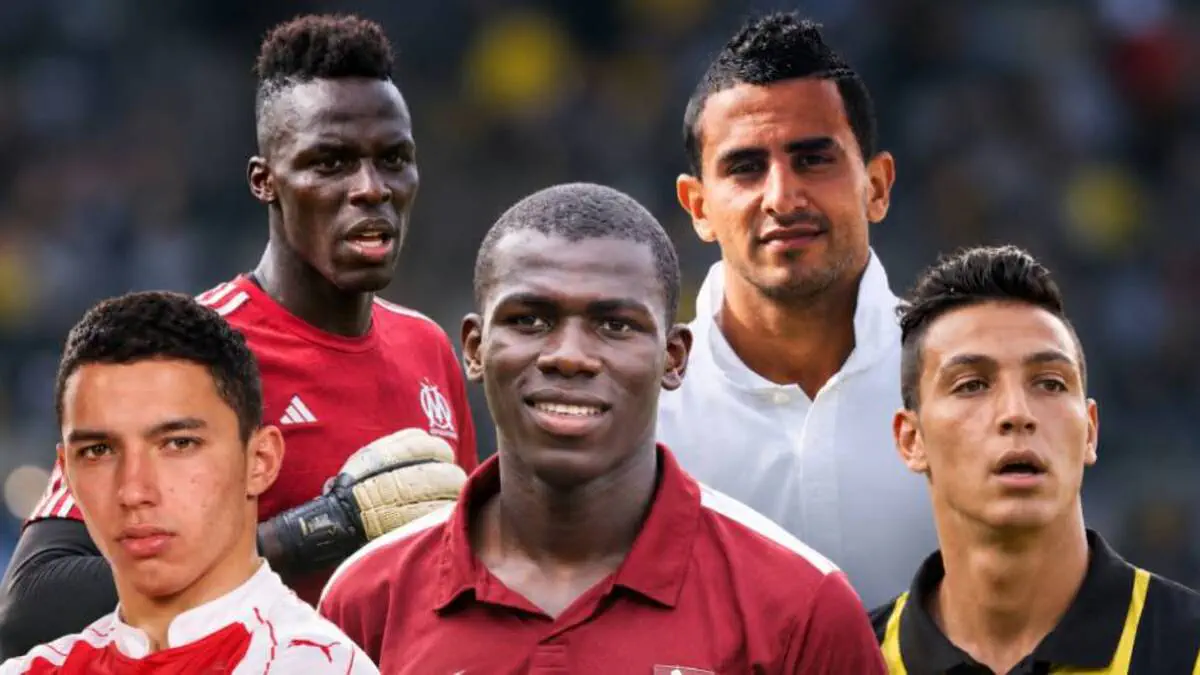
African football continues to produce some of the world's most valuable players, but a significant share of the financial rewards associated with their development is flowing to clubs outside the continent.
New figures published by FIFA reveal a striking imbalance.
Clubs in Senegal received just 15.3% of the training rewards generated by transfers involving players in the country's 2026 World Cup squad while Algerian clubs received only 14%.
By comparison, Argentine clubs received 89.8% of the equivalent rewards linked to their national team players while German clubs collected 88.6%.
Africa may celebrate the achievements of its international stars but the financial benefits of their development frequently follow a very different geographical route.
FIFA 2026 Report: Senegal (15.3%) and Algeria (14%) trail in training rewards
According to a FIFA report published on 17 July 2026, transfers involving 530 players selected for the World Cup generated approximately $221 million in training compensation and solidarity contributions.
Those payments benefited clubs involved in developing players from 46 of the tournament's 48 participating national teams.
Across the entire sample, an average of 63% of the rewards went to clubs belonging to the same national associations as the players' international teams.
Yet Senegal and Algeria recorded considerably lower percentages:
- Argentina: 89.8%
- Germany: 88.6%
- Senegal: 15.3%
- Algeria: 14.0%
The contrast is particularly significant for Senegal, one of Africa's most successful producers of international football talent.
FIFA placed Senegal among the ten World Cup nations whose players generated the highest total training rewards but only a relatively small percentage of those rewards benefited clubs registered in Senegal.
How FIFA transfer rules favor European academies over African clubs
The answer lies partly in how international football's transfer system works.
A player's nationality does not determine which clubs receive financial compensation for developing him.
Under FIFA regulations, those rights depend primarily on the clubs with which he was registered during specific stages of his development.
A Senegalese international who spent his teenage years at a French academy may consequently generate training rewards for that French club.
The same principle applies to Algerian internationals who developed in France and later represented Algeria at senior level.
The regulations are designed to compensate the institutions that actually trained the player, regardless of nationality.
When promising African players spend substantial portions of their developmental years outside Africa, a corresponding share of future financial rewards becomes linked to clubs abroad.
The result is that a national team can benefit enormously from a player's sporting development without its domestic clubs receiving an equivalent financial return.
FIFA solidarity mechanism explained: How the 5% rule works
FIFA provides two principal mechanisms for rewarding clubs that develop players.
The first is training compensation, which can become payable when a player signs his first professional contract or completes certain international transfers early in his career.
The second is the solidarity mechanism.
Under FIFA's Regulations on the Status and Transfer of Players, up to 5% of the compensation involved in an eligible transfer is distributed among clubs responsible for training the player between the calendar years of his 12th and 23rd birthdays.
Consider a hypothetical transfer worth $50 million.
The total solidarity contribution could amount to $2.5 million, distributed among eligible training clubs according to the player's registration history.
That does not mean a single African academy would automatically receive the full $2.5 million.
Its entitlement would depend on how many eligible training years the player spent there.
Meanwhile, the much larger transfer payment primarily belongs to the selling club, subject to the applicable solidarity deductions and other contractual arrangements.
This distinction helps explain why a player originally identified in Africa can eventually command an enormous transfer fee without producing a comparable financial return for his earliest development institution.
The generation foot model: How African academies partner with Europe
Senegal offers an important example of how African clubs can build structured relationships with European football.
Generation Foot, the academy that helped develop Sadio Mane has maintained a long standing partnership with French club FC Metz.
The arrangement has provided a pathway for emerging Senegalese footballers to continue their development in Europe.
Mane followed that route before establishing himself at Salzburg, Southampton and Liverpool.
Other players including Pape Matar Sarr and Ismaila Sarr also progressed through Generation Foot and Metz.
As Foot Africa previously reported in its coverage of Pape Amadou Diallo, the partnership has continued to provide opportunities for emerging Senegalese talent.
FIFA Clearing House Impact: Can Electronic Passports Help African Clubs?
The financial scale of football's development economy has increased considerably.
FIFA reported in July 2026 that almost $1 billion in training rewards had been generated through transfers processed since the launch of its Clearing House system in November 2022.
Of that amount, more than $639 million had already been distributed.
The Clearing House was introduced to identify eligible training clubs, calculate their entitlements and facilitate payments.
It relies on electronic player passports documenting a footballer's registration history.
The system represents an important improvement for smaller clubs, particularly those that previously lacked the resources to follow international transfers and pursue outstanding payments.
But financial distribution depends on accurate registration records and the successful completion of the relevant procedures.
For African clubs and federations, maintaining reliable player histories, documenting academy development and completing compliance requirements are therefore crucial.
The system can help deliver money to eligible training clubs but it cannot automatically ensure that more of a player's developmental years take place within Africa.
Nor can it guarantee that an African club will retain a larger share of the profits from subsequent transfers.
Those outcomes depend on broader decisions involving investment, contracts, development structures and the timing of player departures.
The future of African football transfers: Retaining talent and wealth
The global transfer market continues to expand.
According to FIFA's Global Transfer Report 2025, spending on international transfers in men's professional football reached a record $13.08 billion, with 24,504 moves completed during the year.
As Foot Africa examined in its report on the most expensive African transfers, leading African footballers are increasingly involved in major European transfer deals.
But rising transfer valuations do not necessarily translate into stronger financial foundations for the clubs and academies where some of those careers began.



Africa
Yesterday at 15:02

Africa
Yesterday at 14:15

Africa
Yesterday at 12:24

Africa
Yesterday at 12:10

AFCON
13 November 2026
AFCON
13 November 2026
Interviews
12 November 2026

AFCON
10 November 2026
Africa
09 November 2026