
CAF's Group-Stage VAR Revolution: Can Technology Fix African Club Refereeing?
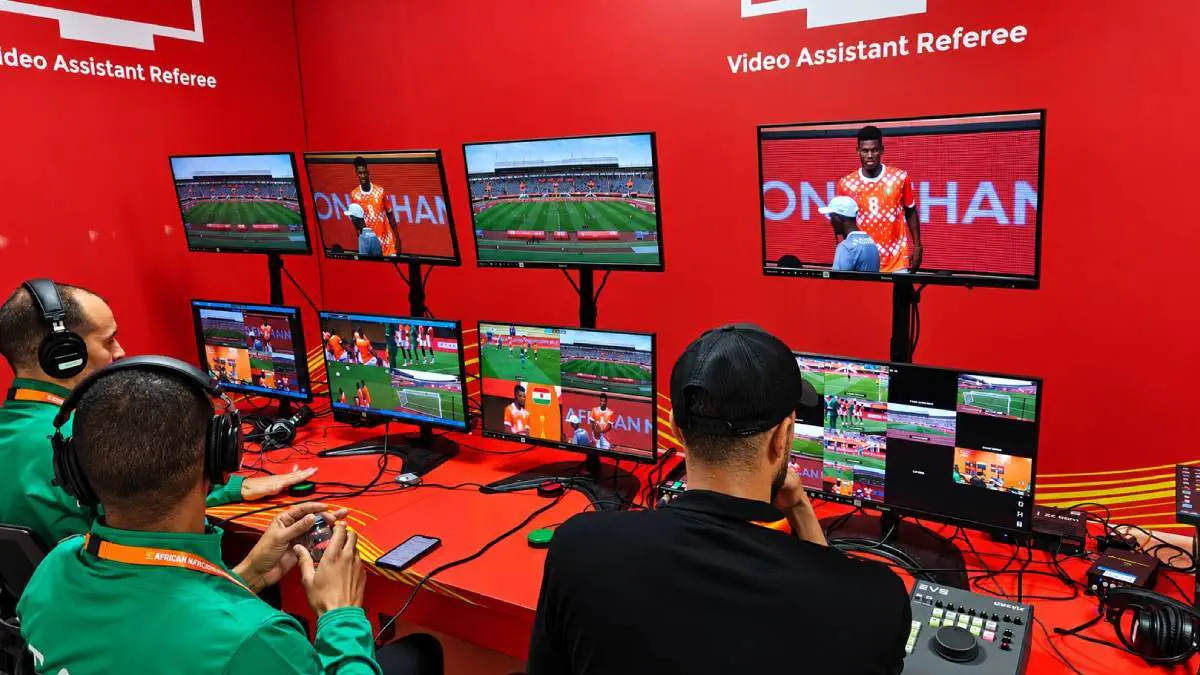
African club football has entered a new era. On 27 November, CAF introduced Video Assistant Referee (VAR) technology across every group-stage match of the 2026/27 Champions League and Confederation Cup, a historic first for both competitions.
After years of controversy surrounding refereeing decisions in high-pressure continental fixtures, Matchday 1 has offered the first glimpse of whether technology can genuinely change African football.
Why has CAF finally introduced VAR in the group stages?
Until this season, VAR in African club competitions was generally reserved for knockout matches, leaving crucial group-stage encounters without the same level of video assistance.
That changed when CAF officially confirmed its expanded rollout on 27 November.
The decision covers all 96 scheduled group-stage fixtures across the CAF Champions League 2026/27 and CAF Confederation Cup, involving 32 clubs competing in eight groups.
The expansion is supported by CAF's VAR Academy, launched in 2024 to strengthen refereeing standards across the continent.
According to CAF, the programme has provided technology and trained qualified Video Match Officials across all six regional unions.
The governing body also organised preparations for participating clubs, including a Cairo workshop covering refereeing procedures, match operations and VAR protocols.
This represents more than a technological investment. CAF is attempting to standardise officiating across competitions involving stadiums, referees and clubs operating under significantly different conditions.
Matchday 1 delivers the first major VAR intervention
The opening weekend has already demonstrated how video technology can influence a group's standings.
On Sunday 29 November, Angola's Petro Atlético thought they had broken the deadlock against Mauritania's FC Nouadhibou in their CAF Champions League Group A encounter.
However, a 74th-minute goal involving Kinito was disallowed following a video review.
The match finished 0-0, leaving both teams with one point instead of handing the Angolan hosts a potentially decisive victory.
CAF's official match report confirmed the intervention, although it did not specify the infringement responsible for overturning the goal.
The incident illustrates the significance of extending VAR beyond knockout football.
In a group where only the top two teams advance, a single decision can directly influence qualification prospects.
Can VAR finally reduce the fear of playing away in Africa?
African club competitions are renowned for their intense home atmospheres, from Cairo and Casablanca to Tunis, Johannesburg and Dar es Salaam.
That passion is part of their appeal, but the pressure surrounding crucial decisions can also create perceptions of inconsistent refereeing.
VAR introduces an additional layer of scrutiny, particularly for visiting teams facing disputed penalties, goals or serious disciplinary incidents.
Previously, a controversial decision during an early group-stage fixture could stand without video review, despite potentially determining which club advanced to the quarter-finals.
Now, referees have access to footage that can help correct significant errors regardless of the venue.
However, technology cannot eliminate home advantage itself.
Crowd intensity, travel demands and unfamiliar conditions remain important factors, while video officials must still interpret incidents objectively.
The real achievement would be ensuring that visiting teams receive the same standard of decision-making as their opponents, not necessarily producing more away victories.
The real challenge: Can every African stadium deliver reliable VAR?
CAF's announcement represents a significant commitment, but implementing VAR across multiple countries creates operational challenges.
Reliable camera coverage, communication equipment, replay systems and trained technical personnel are essential to effective video officiating.
Differences in stadium infrastructure and broadcast production could influence the quality of available footage, particularly when judging marginal offside decisions or potential handballs.
Communication delays also remain a concern.
Lengthy reviews risk disrupting the rhythm of matches and frustrating supporters, especially when stadium audiences receive little explanation of the decision.
Under the International Football Association Board's VAR protocol, the referee retains final decision-making authority, while technological malfunctions can require matches to continue without video assistance.
The challenge for CAF is therefore not simply installing equipment but maintaining consistent operating standards throughout the competition.
Technology cannot fix the human factor in CAF refereeing
Even with multiple camera angles, VAR decisions can remain controversial.
A replay may establish whether contact occurred, but determining whether that contact constitutes a foul often requires subjective interpretation.
The distinction matters because VAR is intended to correct clear errors, not replace every judgment made by the referee.
CAF must therefore assess more than the number of decisions overturned.
Referee consistency, review accuracy, communication and transparent performance assessments will ultimately determine whether confidence improves.
Publishing clearer explanations of major decisions could also help supporters understand why similar incidents sometimes produce different outcomes.
Without accountability, the technology risks becoming another source of debate rather than a solution.
The verdict: Matchday 2 will test whether the revolution is sustainable
The next round of group-stage fixtures takes place from 4 to 6 December, giving CAF another opportunity to demonstrate the reliability of its expanded VAR system.
As Foot Africa previously reported, the governing body had already signalled its intention to introduce video assistance at this stage earlier in the season.
The opening weekend has delivered a meaningful example of VAR influencing a match result, but one round cannot establish whether the system has improved officiating across the continent.
That assessment will require evidence accumulated over the remaining five matchdays, particularly regarding decision consistency and technical reliability.
Africa's VAR revolution is a historic step forward. Whether it becomes a lasting success will depend less on the presence of cameras than on the transparency, competence and accountability of the officials using them.



Africa
Today at 13:35

Africa
Today at 13:31

Africa
Today at 11:46


AFCON
Yesterday at 04:00

AFCON
13 November 2026

AFCON
13 November 2026

Interviews
12 November 2026

AFCON
10 November 2026