
Exclusive: Three major loopholes in CAF’s rulebook that nearly cost Senegal AFCON 2025, sports law adviser reveals
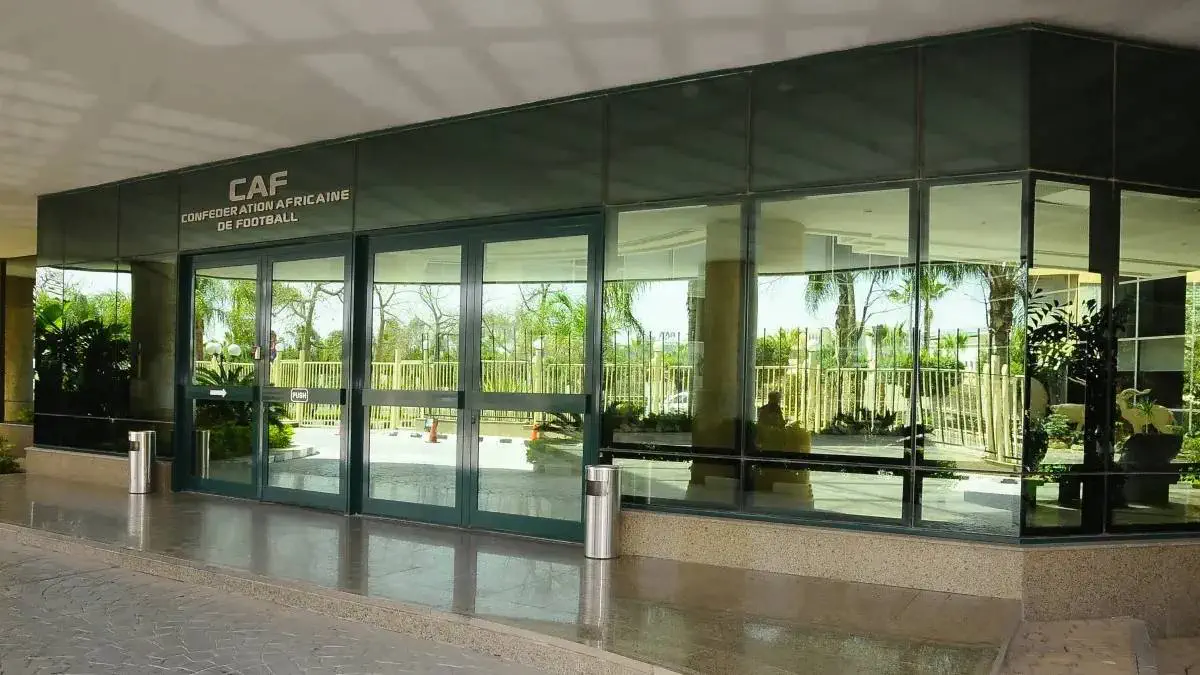
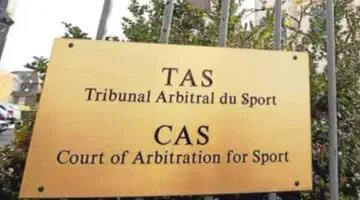
When the Court of Arbitration for Sport (CAS) overturned the Confederation of African Football’s (CAF) Appeal Board ruling on 24 November and reinstated Senegal as AFCON 2025 champions, many fans questioned the competence of CAF’s internal judicial bodies.
Yet in the final installment of her exclusive interview with Foot Africa, independent sports law adviser Sarah Zahraoui-Sekour revealed that the real culprit behind the 10 month legal chaos was not CAF’s judges but three critical loopholes hidden inside the competition’s rulebook.
Did CAF’s judicial system fail, or was the rulebook flawed?
Speaking exclusively to Foot Africa, Zahraoui-Sekour stressed that CAS’s reversal does not automatically mean CAF’s judicial bodies failed, explaining that Article R57 of the CAS Code empowers the Lausanne court to rehear disputes from scratch on both the facts and the law.
Instead, the core problem was that Articles 82 and 84 of the AFCON Regulations were drafted loosely enough to support two completely opposite legal readings:
Morocco’s literal reading: Leaving the pitch without the referee’s permission is enough on its own to trigger an automatic 3-0 forfeit.
CAS’s contextual reading: A forfeiture only applies if the referee stops the match permanently.
"That is why, on the same facts, the Disciplinary Board and the Appeal Board, by majority, reached opposite conclusions before CAS ruled unanimously," Zahraoui-Sekour told Foot Africa.
Three glaring loopholes exposed in CAF’s regulations
In her legal breakdown for Foot Africa, Zahraoui-Sekour pinpointed three exact flaws in CAF’s rules that allowed the controversy to spiral out of control:
The rules never say who has the last word: Article 82 links a forfeit to leaving the pitch without authorisation, yet fails to clarify what happens if the referee chooses to restart play.
"Does the restart close the incident or can CAF's judicial bodies still declare a forfeit afterwards? The text does not say," she explained, adding that Article 84’s rule preserving the score "at the moment the match was stopped" was designed strictly for abandoned games.
The same walk-off was punished twice: Senegal’s temporary departure was handled in two separate tracks—first through disciplinary proceedings that sanctioned head coach Pape Thiaw, several players, and the federation, and later in a separate battle over the match result.
As Zahraoui-Sekour noted in her analysis of why Senegal’s 14-minute walk-off did not cost them the title, no CAF rule specifies whether disciplinary sanctions settle the matter or whether a forfeit can still be added on top.
A continental trophy changing hands twice in ten months: Because the regulations left room for contradictory verdicts, the AFCON 2025 title was won on the pitch by Senegal in January, handed to Morocco by CAF’s Appeal Board in March, and finally restored to Senegal by CAS in November.
The simple fix CAF must adopt before future tournaments
To ensure referees and federations never face a similar legal nightmare again, Zahraoui-Sekour urged CAF to amend its regulations in writing before the next edition kicks off.
"The fix is simple to state: CAF must decide, in writing and in advance, whether a restart erases a walk-off. Otherwise, the next referee in that situation will be deciding a continental title alone, in real time, under extreme pressure."
She concluded that while the dispute represented a genuine debate over regulatory interpretation, the 24 November CAS award remains subject only to the narrow remedies available under Swiss law—an avenue she previously analyzed regarding why Morocco faces slim odds before the Swiss Federal Tribunal.



Africa
Yesterday at 13:22

Africa
Yesterday at 11:38

Africa
Yesterday at 10:19
AFCON
Yesterday at 04:00

Africa
26 November 2026

Africa
26 November 2026
Africa
25 November 2026
AFCON
Yesterday at 04:00

AFCON
13 November 2026
AFCON
13 November 2026
Interviews
12 November 2026

AFCON
10 November 2026