
Foot-Africa Exclusive / Senegal, Morocco: Amobi Ezeaku assesses AFCON 2025 CAS verdict and Morocco’s Swiss Court challenge
Exclusive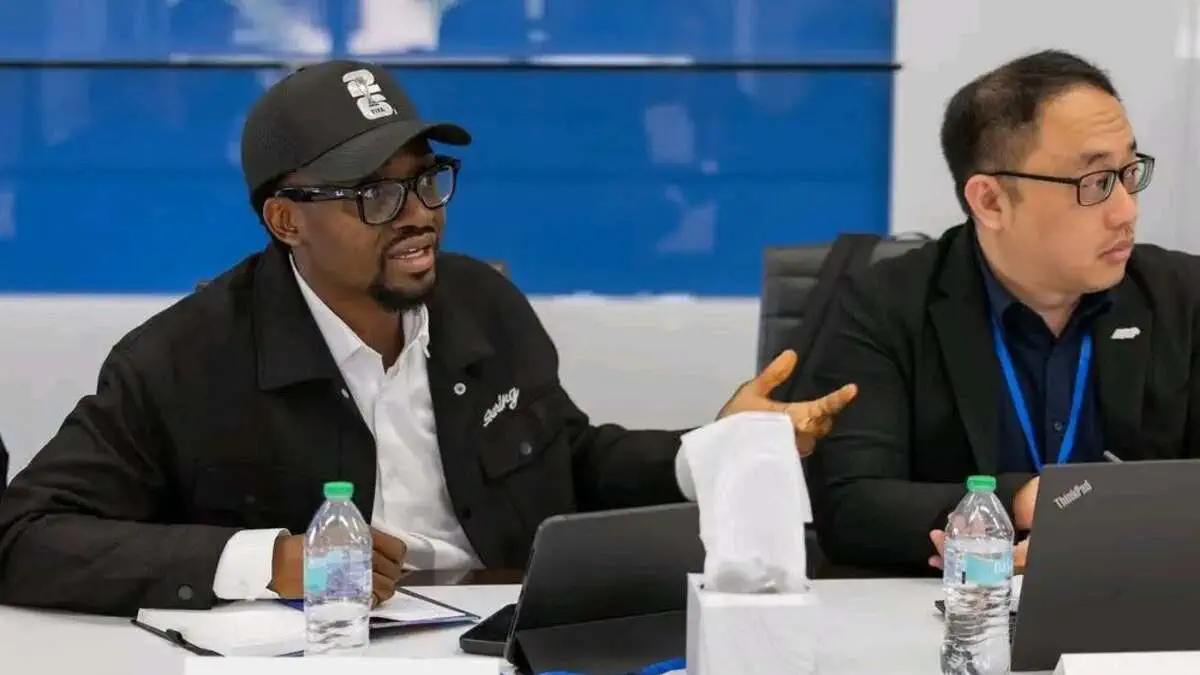
The Court of Arbitration for Sport (CAS) has ruled in Senegal’s favour in the dispute over the 2025 Africa Cup of Nations final, but Morocco is not ready to abandon their fight. As the North African country prepares to challenge the award before the Swiss Federal Supreme Court, Rangers International General Manager and CEO Barrister Amobi Ezeaku has assessed its legal options.
In an exclusive interview with Foot Africa, the Nigerian football administrator and sports lawyer explains why Morocco’s remaining route is not another appeal on the merits of the match. He also examines the allegations surrounding the CAS panel, questions Morocco’s chances of success and brings the case of Nigeria’s Edo Queens into the debate over sporting decisions in African football.
Ezeaku has been involved in three Nigeria Premier Football League title-winning campaigns with Rangers: as team manager in 2016 and as General manager and CEO during the 2023/24 and 2025/26 triumphs.
AFCON 2025: Ezeaku explains Morocco’s five grounds for challenging CAS verdict
Ezeaku welcomed the decision in favour of Senegal, recalling that he had anticipated the outcome before the verdict was delivered.
“It’s a beautiful morning for African football. I am happy with the verdict of the Court of Arbitration for Sport. And you recall that I had predicted that CAS will rule in favour of Senegal. You remember?”
However, he stressed that Morocco’s principal remaining option is an application before the Swiss Federal Supreme Court, also known as the Swiss Federal Tribunal in Lausanne.
“Morocco's principal remaining avenue is the Swiss Federal Supreme Court. That is also known as the Swiss Federal Tribunal in Lausanne. And in legal terms, this is not another appeal on football merits. It's an application to set aside that arbitral award on limited grounds.”
The sports lawyer explained that Morocco cannot simply ask another court to reconsider whether Senegal abandoned the match or whether CAS was correct to award a 3-0 forfeit victory.
Read Also: Who is Atilola Bashiru? Meet the new member of FIFA's NFF Normalisation Committee
He pointed to Article 190, Paragraph 2 of Switzerland’s Private International Law Act (PILA), which provides five grounds on which an international arbitral award can be challenged.
“Remember they announced saying there was contact between the Federation President of Senegal and, of course, the man from CAS, right? So the distinction is very, very crucial. Morocco cannot simply ask another court to reconsider whether Senegal abandoned the match or whether CAS's 3-0 forfeit decision was correct.
“Under Article 190, Paragraph 2 of the Swiss Private International Law Act, what we popularly call the PILA, an international arbitral award can be challenged on five grounds.”
The first concerns the improper constitution of the arbitral tribunal, including a defect affecting the appointment or independence of an arbitrator.
The second is a lack of jurisdiction. On that point, Ezeaku said he did not see an issue with CAS having jurisdiction over the dispute.
The third ground concerns an arbitral tribunal deciding matters beyond the submissions of the parties, known as ultra petita, or failing to decide a claim that was put before it.
“Third, ultra-petita or failure to decide. CAS decided matters beyond parties’ submissions or failed to address a claim. If they do that, then the Swiss Federal Supreme Court can say, okay, you need to go back.”
The fourth ground is a violation of procedural rights, particularly the right to equal treatment and the right to be heard.
The fifth and final ground is incompatibility with public policy, which Ezeaku described as a very narrow basis for challenging an international arbitral award under Swiss arbitration jurisprudence.
“And again, the normal deadline is 30 days,” he added.
Ezeaku also addressed the allegations of contact between Senegal Football Federation president Abdoulaye Fall and CAS arbitrator Ulrich Haas, which have become a central part of Morocco’s intended challenge.
“And let me also say that the president of that panel, Mr Haas, is my good friend. I met him in Switzerland years ago, and he's a very upright person.”
Ezeaku said the alleged communication was potentially the most interesting aspect of Morocco’s challenge, but emphasised that the claims had been denied.
“They've alleged that Senegal FA president, Abdoulaye Fall, communicated by telephone with CAS arbitrator Haas shortly before that decision.
“But if you follow the proceedings yesterday, both Haas and the Senegal Federation have denied the allegation, and even some of the reports could not independently be verified, whether the call occurred or what was discussed.”
He explained that the allegation raises important questions about the independence and impartiality of arbitrators, undisclosed communication with a party to proceedings, the duty to disclose circumstances that could create legitimate doubts about impartiality and the right to equal treatment.
“From a sports arbitration perspective, this raises questions about independence and impartiality of arbitrators, undisclosed communications with a party to proceedings, the duty to disclose circumstances that could create legitimate doubts about impartiality, and, of course, the right to equal treatment of parties.”
Despite the seriousness of those issues, Ezeaku was not convinced Morocco would succeed.
“But in my humble view, I do not think that Morocco can get their way here, because it is very difficult to prove such communication.”
Ezeaku’s legal background complements his football administration career. He holds a FIFA Master and a UEFA Certificate in Football Management, and has worked as a sports and entertainment lawyer at Lexsetters LLP. He also recently attended the FIFA International Player Transfer Course in Miami.
Why Ezeaku rules out FIFA, CAF and other international courts
Ezeaku also dismissed the possibility of Morocco taking the dispute back to FIFA or CAF, or pursuing an appeal through other international judicial bodies.
He insisted that neither organisation could sit as an appellate court over a decision already delivered by CAS.
“And like you rightly said, when I was listening, my assessment is that neither of all these provides an ordinary appellate route. Morocco cannot go again to FIFA, because FIFA cannot sit on an appellate court, and they cannot sit on an appellate court over a CAS award.
“They cannot go back to CAF, because CAF cannot overturn the CAS award. They cannot go to the European Court of Human Rights, because this is not an ordinary appeal mechanism against CAS. They cannot even go to the International Court of Justice, because the International Court of Justice has no jurisdiction to hear this federation versus federation sporting appeal.”
According to the Rangers chief, the Swiss Federal Supreme Court remains Morocco’s only relevant judicial avenue, although its powers are restricted.
“So the only place they can go to is the Swiss Federal Supreme Court, and it has relevant judicial avenue. It is restricted. It cannot rule on the merit of the game.
“What they can say is, please, we found that there are certain violations with the five principles, five grounds for challenging this appeal.
“Okay, go back and re-hear this appeal.”
Asked why Morocco would continue pursuing the case despite the limitations of the Swiss court process, Ezeaku suggested that the country would not give up easily.
“Yeah, you know, I know the Arabs. They don't ever, ever give up. I know the mentality. I live there. I do business with them.”
He added that Morocco had shifted its focus away from the original arguments concerning the regulations governing the match and was now concentrating on alleged irregularities in the hearing.
“And now, they have now gone away from the purviews of Articles 32 and 34 of the African regulations. They are no longer challenging that. Now, they are looking at the irregularities in the hearing.
“So they never, ever give up. But I said a few minutes ago, no matter where they go to, I don't see them succeeding. Remember that we had predicted this 10 months ago.”
For Ezeaku, the distinction between an appeal on the sporting merits and an application to set aside an arbitral award is central to understanding Morocco’s position. Even if the Swiss court finds a procedural issue, that would not automatically mean a different verdict on the result of the AFCON final.
Ezeaku brings Edo Queens into AFCON 2025 debate on African football justice
Beyond the immediate dispute between Senegal and Morocco, Ezeaku believes the CAS ruling could have wider implications for African football jurisprudence.
He rejected the suggestion that the decision had set a bad precedent, arguing instead that sporting disputes should be tested through the proper legal channels.
“No, no, no. It is. It is a very good precedent for African sporting jurisprudence and lawyers in my school of thought, we believe that stuff like this should be tested.”
He then brought up the case of Edo Queens, who were involved in a controversial decision during the WAFU B women's qualifying competition.
The Nigerian club initially won the final against Ghanaian side Ampem Darkoa Ladies on penalties. However, Ampem Darkoa protested to CAF, arguing that the match should have gone to extra time before the shootout.
CAF subsequently annulled the penalty result and ordered the match to resume in Cairo, Egypt, rather than Ouagadougou, Burkina Faso. Edo Queens lost the resumption, allowing Ampem Darkoa to progress to the 2026 CAF Women's Champions League.
Ezeaku suggested that Edo Queens could also consider challenging the decision if they had the financial resources to pursue the matter.
“In fact, yesterday, I was talking with my friend in Washington and I said to him, Edo Queens can also appeal if they have the means to appeal, if they can pay lawyers to take their matter up because sporting decisions should not be upturned in the boardroom.”
He believes the Senegal-Morocco case should encourage more African clubs and football stakeholders to seek legal remedies when they believe sporting decisions have been wrongly handled.
“So I think that this is good for the jurisprudence of African football, especially in the context of everyday boardroom decisions coming from CAF, coming from the 54 member federal associations belonging to CAF, especially on the African continent.
“So I feel that it is a step in the right direction. Matters are meant to be tried through the proper channels. So when you try these matters to the Supreme Court of Sports and then decisions made, I do not see any reason why you should go beyond that.”
Read Also: Manchester United: The Red Devils remain very keen on Victor Osimhen in January



AFCON
13 November 2026
AFCON
13 November 2026
Interviews
12 November 2026

AFCON
10 November 2026
Africa
09 November 2026