After Al Ahly star's exclusion.. 3 tactical solutions put Ali Maher's mind to a decisive test against Malawi
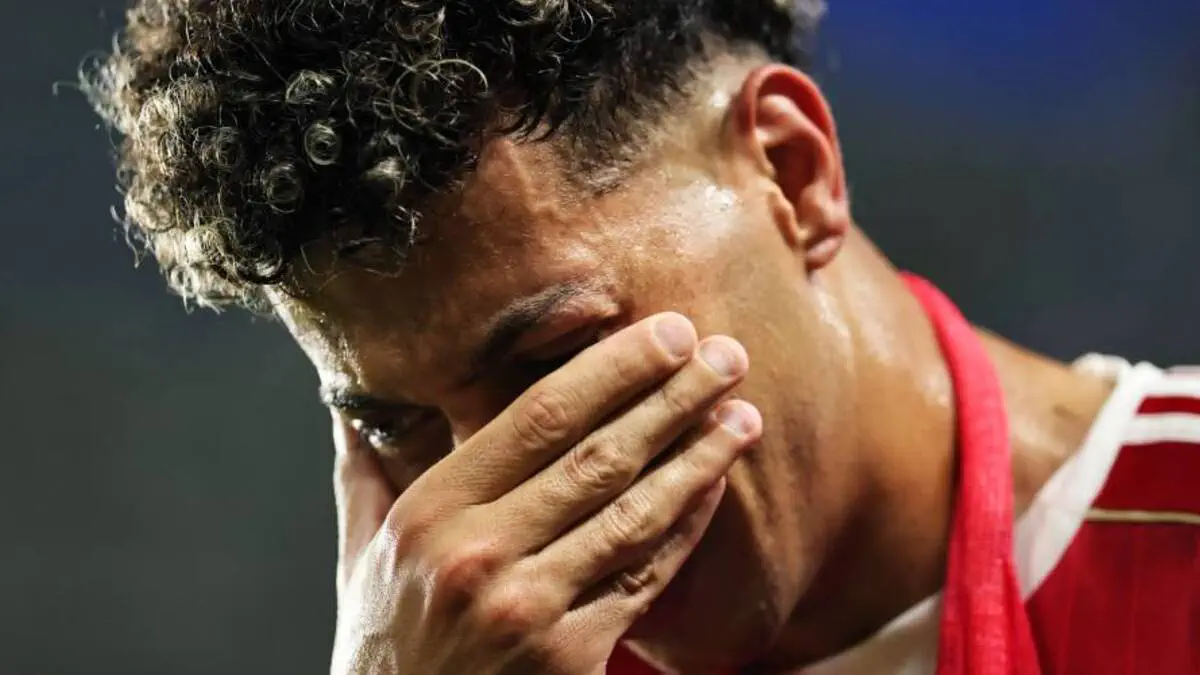


Egypt's new national team coach Ali Maher has made one of his most significant early decisions by leaving Al Ahly midfielder Emam Ashour out of his first squad for the 2027 Africa Cup of Nations qualifiers against Malawi.
The 26 man squad, announced on Sunday 8 November includes several returning players, notably Nasser Maher, Mohamed Shehata and Mahmoud Hassan Trezeguet but there is no place for Ashour.
The decision comes after the midfielder missed Al Ahly's last four matches, with his lack of recent competitive action emerging as an important factor in discussions surrounding his international absence.
However, Ashour's omission raises a bigger tactical question, could Maher's first international window mark the beginning of a different midfield structure for the Pharaohs?
With Egypt leading Group B and preparing for two crucial qualifiers, the new coach must find the right balance between defensive stability, creativity and attacking support.
Read Also: من المجازفة بالشباب إلى خبرة المخضرمين.. قراءة تحليلية لخيارات علي ماهر الأولى مع مصر
Emam Ashour absent.. What explains the decision?
Ashour's exclusion was one of the most notable developments when Maher unveiled his first national team selection.
The midfielder has been absent from Al Ahly's recent matches, missing four consecutive fixtures before the squad announcement.
According to multible reports, Ashour's omission followed that period without competitive action.
His absence has attracted attention because of the technical qualities he offers.
Ashour is capable of operating as an advanced central midfielder, carrying the ball through opposition lines, supporting attacking movements and arriving in dangerous positions around the penalty area.
Those characteristics provide a different dimension from the more defensive responsibilities typically associated with Marwan Attia and Mohanad Lasheen.
Nevertheless, the Egyptian Football Association has not publicly announced a detailed individual explanation for Ashour's exclusion.
The decision should therefore not be interpreted as confirmation that the 28 year old has permanently lost his place in the national team.
For now, it represents an immediate selection decision at the beginning of Maher's tenure.
Three midfield returns.. Who benefits from Ashour's absence?
The changes become more revealing when Maher's selections are compared with Hossam Hassan's previous international squad.
The new coach has brought back Nasser Maher, Mohamed Shehata and Trezeguet who missed the September camp because of injury.
At the same time, Ashour, Hamdi Fathi and Ali Mahmoud are among the players absent from the latest midfield selections.
The changes could give Egypt several alternative combinations.
Nasser Maher offers a more creative option, particularly in advanced positions where his passing and ability to connect midfield with attack can help unlock organised defensive systems.
Mohamed Shehata provides mobility and defensive coverage, allowing the coaching staff to consider different combinations alongside Marwan Attia.
Meanwhile, Mahmoud Saber offers another progressive midfield option, with the ability to advance into attacking areas rather than remain exclusively in a holding role.
The return of Trezeguet adds experience and attacking versatility, although he is more naturally associated with wide attacking positions.
These differences are important because replacing Ashour does not necessarily require finding another player with precisely the same qualities.
Maher could instead redistribute his responsibilities across several midfield and attacking players.
Nine midfielders selected.. But only five central options?
A closer examination of the official squad published by the Egyptian Football Association reveals an interesting detail.
Nine players are listed in the midfield category:
- Marwan Attia
- Mohanad Lasheen
- Mahmoud Saber
- Mohamed Shehata
- Nasser Maher
- Ibrahim Adel
- Trezeguet
- Ahmed Sayed Zizo
- Haitham Hassan
However, the positional distribution is more complicated than the official classification suggests.
Ibrahim Adel, Trezeguet, Zizo and Haitham Hassan are all capable of operating in wide attacking roles.
That leaves five players who are more naturally associated with central midfield responsibilities.
This distinction could influence Maher's tactical decisions.
If Egypt deploy a three man central midfield, the coach must choose between maintaining a defensively balanced combination and using a more attack oriented player to support the forwards.
Without Ashour, the competition between Nasser Maher, Mahmoud Saber and Mohamed Shehata could become particularly significant.
Three tactical possibilities.. How could Maher reorganise Egypt?
Ashour's absence presents Maher with several possible approaches ahead of the Malawi double header.
One option would be to maintain a relatively conservative central pairing involving Marwan Attia and Mohanad Lasheen, prioritising defensive protection and allowing the attacking players greater freedom.
A second possibility would involve Mohamed Shehata alongside Attia, providing mobility and potentially greater intensity in midfield transitions.
The third, more attacking alternative could see Nasser Maher or Mahmoud Saber operate ahead of a deeper midfielder, helping connect the central areas with Mohamed Salah, Omar Marmoush and the other attacking options.
None of these combinations has yet been confirmed as Maher's preferred approach.
However, they underline why the exclusion of a single midfielder could have consequences beyond a straightforward change of personnel.
It may influence Egypt's buildup play, defensive balance and the distribution of attacking responsibilities.
The Malawi matches will provide the first meaningful evidence of which approach the new coach favours.
Malawi double header.. The first test for Egypt's new midfield
The timing of the changes makes the situation particularly important.
Maher was appointed on Saturday 7 November, replacing Hossam Hassan, before announcing his first squad the following day.
He therefore has limited preparation time before Egypt host Malawi at Cairo International Stadium on Friday 13 November.
The return fixture will take place at Bingu National Stadium in Lilongwe on Tuesday 17 November.
The Pharaohs currently lead Group B with four points after drawing 0-0 against Angola and defeating South Sudan 5-0 in September.
Malawi sit third with three points, making the two meetings important for both teams' qualification ambitions.
Is this a temporary absence or the beginning of a new hierarchy?
Ashour's exclusion does not necessarily signal the end of his international importance.
A return to regular club football could strengthen his case for a future recall, particularly given the attacking qualities he brings to central midfield.
But November offers an opportunity for other players to establish themselves.
If Nasser Maher, Mohamed Shehata or Mahmoud Saber impress against Malawi, the competition for midfield places could become considerably more intense.
Equally, any difficulty in connecting midfield with attack may reopen the debate about the qualities Egypt are missing without Ashour.







Africa
Today at 05:30
Africa
Today at 01:59
Europe
06 November 2026
Africa
01 November 2026