
From extension until 2030 to dismissal.. What ended Hossam Hassan's project with the Egypt national team?
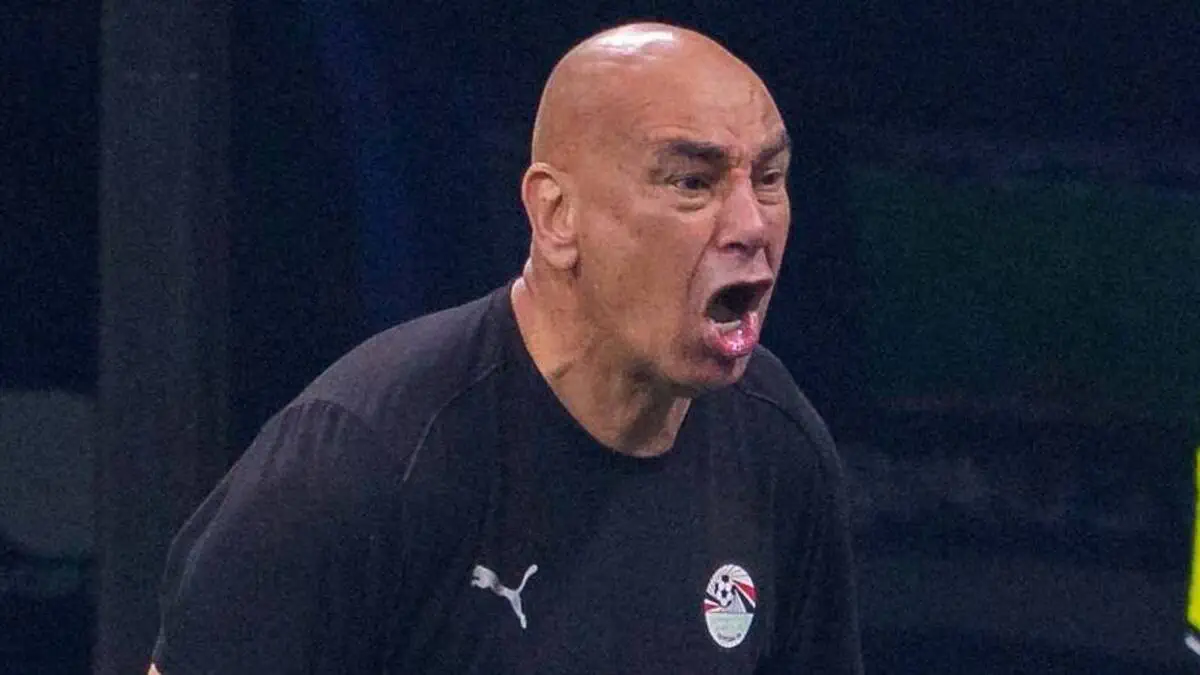
On 8 July 2026, the Egyptian Football Association EFA made a decision that appeared to secure Hossam Hassan's future as national team coach.
Just hours after Egypt's dramatic World Cup elimination against Argentina, EFA president Hany Abo Rida announced that the federation had approved new contracts for Hassan and his twin brother Ibrahim, the national team's director.
On 1 September, that commitment became official when Hassan signed a contract extension until 2030.
But on Saturday 7 November, the same federation announced his dismissal and appointed Ali Maher as his successor.
Just 122 days separated the initial renewal decision from Hassan's departure while only 67 days passed between the formal contract signing and his dismissal.
Even more remarkably, Egypt played just three matches during those final 67 days recording one victory, one draw and one defeat.
So how did a coaching project backed by a historic World Cup achievement collapse in just four months?
8 July: Egypt's historic World Cup campaign earns Hassan another chance
The story begins with one of the most memorable campaigns in Egyptian football history.
Under Hassan, the Pharaohs secured their first ever World Cup victory by defeating New Zealand 3-1 before progressing beyond the group stage for the first time.
They then eliminated Australia on penalties in the Round of 32 setting up a difficult encounter against Argentina.
On 7 July, Egypt came agonisingly close to producing one of the tournament's biggest surprises.
Hassan's side established a 2-0 advantage against Lionel Messi's Argentina but eventually suffered a dramatic 3-2 defeat after conceding three late goals.
As Foot Africa detailed in its analysis of the Argentina encounter, Egypt had executed an impressive tactical plan before losing control of the closing stages.
The following day, Abo Rida announced the federation's approval of renewed contracts for the Hassan brothers, explaining that the decision reflected its desire to continue the national team's technical project.
August: The World Cup controversy follows Hassan home
Hassan and several members of the Egyptian delegation had criticised the officiating after the Argentina match, prompting disciplinary proceedings from FIFA.
On 20 August, the Egyptian Football Association issued an official statement confirming that it was preparing a legal response to the proceedings involving Hassan, Ibrahim Hassan and striker Mostafa Ziko.
As Foot Africa reported at the time, the federation publicly backed its representatives and indicated that it would defend their position through the relevant legal channels.
The episode was significant for two reasons:
- First, it demonstrated that the controversy surrounding the World Cup had not ended with Egypt's return home
- Second, the federation was still defending the coaching staff rather than publicly questioning their future
There was no official indication at that point that Hassan's renewed mandate was under immediate threat.
1 September: Egypt signs Hassan until 2030
On 1 September, the EFA formally completed the contract extension.
The signing ceremony involved Abo Rida, vice president Khaled El Darandaly, secretary general Mostafa Azzam, Hassan, his brother Ibrahim and the team's administrative director Walid Badr.
The agreement would keep Hassan in charge until 2030, potentially allowing him to lead Egypt through another World Cup cycle.
The federation described the decision as part of its efforts to preserve technical stability and maintain continuity.
However, the first international break after the agreement would significantly change the atmosphere.
25–29 September: The Mohamed Salah controversy begins
Egypt opened their 2027 Africa Cup of Nations qualifying campaign with a disappointing goalless draw against Angola in Cairo on 25 September.
The result was frustrating, but the most widely discussed moment came in the 60th minute when Hassan substituted captain Mohamed Salah.
The forward subsequently departed the national team camp and missed the second qualifier against South Sudan.
Officially, the EFA explained that Salah's absence had been agreed because of concerns about playing on the artificial surface in Juba.
However, reports of tensions between the player and coach quickly emerged.
Foot Africa examined the conflicting accounts surrounding Salah's departure, including suggestions that the substitution and subsequent comments had contributed to a disagreement.
Hassan publicly denied any personal conflict with his captain.
He insisted that Salah remained an essential member of the national team and explained that the decision to rest him had been discussed before the Angola fixture.
The coach also sought to clarify comments about veteran goalkeeper Mohamed El Shenawy, rejecting suggestions that he had intended to disrespect the Al Ahly star.
As Foot Africa reported in its coverage of Hassan's attempts to defuse the controversy, the manager maintained that his relationships with senior players remained respectful.
On 29 September, Egypt defeated South Sudan 5-0 away from home.
The result gave the Pharaohs four points from their opening two qualifiers.
Yet the convincing victory did not completely silence the discussion about the atmosphere surrounding the national team.
4–6 October: South Africa defeat and concerns over dressing room management
Egypt returned to Cairo for a friendly against South Africa on 4 October.
The match ended in a 1-0 defeat, with Puso Dithejane scoring the winner in the 51st minute.
It was Hassan's first defeat since the World Cup elimination and the performance attracted criticism.
However, the wider discussion increasingly concerned the coach's management style.
The analysis raised questions about his relationships with established players, emerging talents and the football authorities.
It also highlighted an important distinction, Egypt's recent results were not disastrous enough, in isolation, to explain an immediate managerial change.
The Pharaohs had collected four points from two competitive qualifiers and lost a friendly.
Nevertheless, repeated public disagreements and the attention they attracted were becoming an increasingly significant issue around the coaching staff.
That distinction would become particularly important when the federation eventually explained its dismissal decision.
20 October: FIFA suspends Hassan and his brother
The next major development came on 20 October.
FIFA imposed three match suspensions on both Hossam and Ibrahim Hassan following the events surrounding Egypt's World Cup defeat to Argentina.
Mostafa Ziko received a five match suspension.
As Foot Africa confirmed in its report on the sanctions, the EFA requested further clarification of the disciplinary decisions while examining the possibility of an appeal.
The punishments created an additional complication ahead of Egypt's November Africa Cup of Nations qualifiers.
The Hassan brothers faced the prospect of being unable to perform their usual matchday duties during important fixtures against Malawi.
31 October: Why did Hany Abo Rida travel to meet Mohamed Salah?
At the end of October, another development suggested that the Salah issue had not entirely disappeared.
EFA president Hany Abo Rida travelled to Turkey for meetings involving the Turkish Football Federation and the Egyptian captain, who was playing for Trabzonspor.
According to Reuters, the visit was intended in part to help bring the positions of Salah and Hassan closer together ahead of the November international window.
The federation's publicly announced agenda also included discussions about cooperation with Turkish football authorities.
The significance of the meeting lay in its timing.
More than a month had passed since the Angola controversy, yet the relationship between Egypt's captain and its coaching staff remained a subject of attention.
The available reporting does not establish that Salah demanded Hassan's dismissal or that the meeting directly caused the managerial change.
It does, however, show that senior federation officials were involved in addressing an issue that would normally be handled within the national team.
4 November: Another controversy brings official intervention
Three days before Hassan's dismissal, the situation became more complicated.
On 4 November, Egypt's Supreme Council for Media Regulation announced restrictions on Hassan's media appearances amid widespread coverage of a private dispute.
The council said its intervention was intended to protect privacy and limit the public airing of personal disagreements.
Reports indicated that the restriction did not extend to ordinary press conferences dealing specifically with national team matters.
This was a regulatory decision separate from the football federation's disciplinary and sporting responsibilities.
7 November: From an appeal for calm to official dismissal
The final chapter unfolded on Saturday 7 November.
Earlier in the day, the EFA issued a statement urging calm and unity around the national team amid mounting reports that Hassan was about to lose his job.
The statement emphasised the importance of protecting Egypt's preparations for the upcoming matches against Malawi.
Notably, it did not explicitly deny reports of an imminent managerial change.
Later that evening, following a board meeting, the federation officially announced that Hassan and his entire technical and administrative staff would leave their positions.
The EFA said it had reviewed recent events and their negative impact on the national team's image and stability.
It simultaneously appointed Ali Maher, previously in charge of Ceramica Cleopatra, as the new head coach.
The change came just days before Egypt's scheduled training camp on 9 November and the qualifiers against Malawi on 13 and 17 November.
A project renewed until 2030 had ended before its first major November challenge.
Hassan departed with 21 victories from 38 matches as Egypt manager.
His final three fixtures were a 0-0 draw against Angola, a 5-0 victory over South Sudan and a 1-0 friendly defeat against South Africa.
That is perhaps the most revealing statistic of all: the coach was dismissed after just three games following the formal renewal of his contract.
Did Hossam Hassan lose his job because of results or because of everything surrounding them?
The available evidence suggests that Egypt's decision cannot be understood through match results alone.
Hassan had guided the national team to its best World Cup performance, while four points from the opening two Africa Cup of Nations qualifiers left Egypt leading Group B.
Nor did the EFA identify one particular match, player dispute or disciplinary sanction as the exclusive reason for his dismissal.
Instead, its official statement focused on the accumulated impact of recent developments on the team's image and stability.
From World Cup hero to former Egypt coach in four months
Hossam Hassan's departure does not erase the achievements of his tenure.
Egypt reached the World Cup knockout rounds for the first time, secured its first victory at the tournament and came close to eliminating Argentina.





Europe
06 November 2026

Africa
01 November 2026


Europe
28 October 2026

Africa
25 October 2026