


AFCON 2027 qualifiers: Pitch conditions and infrastructure at the center of criticism
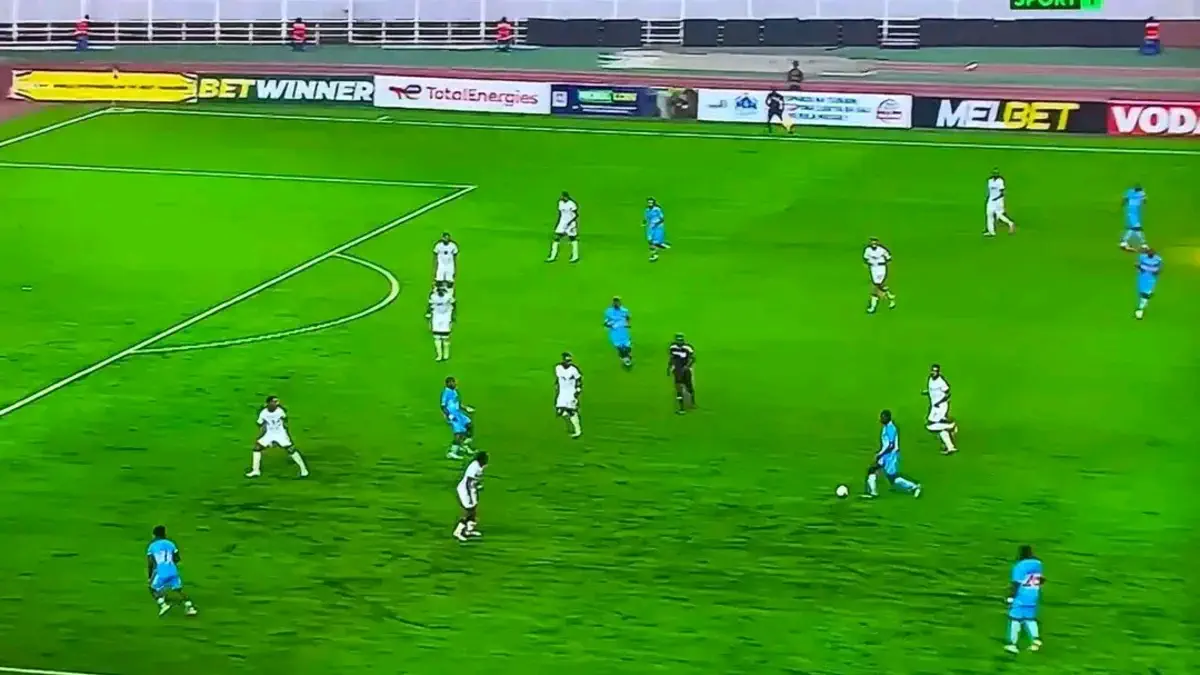
Playing conditions have already sparked reactions after the opening matches of the AFCON 2027 qualifiers. In Togo, Guinea-Bissau and the DR Congo in particular, the condition of the pitches has been criticized by coaches or become the subject of debate.
After Togo’s victory over Burundi (1-0), head coach Patrice Neveu did not avoid the issue of the pitch at Kégué Stadium. The French coach felt that the condition of the surface made it difficult for his team to play along the ground.
“The condition of the pitch does not make it easy at all to play quickly along the ground. It’s really very complicated,” he said after the match.
Patrice Neveu also compared the conditions encountered in Lomé with those his team had enjoyed during its matches in Morocco.
The comment came as Togo began the qualifiers with a victory. The result therefore did not dispel questions about the quality of the playing surface.
In Bissau, rain makes the situation more difficult
In Guinea-Bissau, the pitch at the 24 September Stadium also attracted attention before the country hosted Nigeria on matchday two. The country is in the middle of the rainy season, and the rainfall has made conditions more difficult.
Guinea-Bissau coach Emiliano Té acknowledged that the pitch was “not one of the best,” while stressing that the heavy rain made its maintenance more difficult. His Nigerian counterpart, Eric Chelle, preferred not to pass judgment before seeing the conditions at the venue.
The problem is particularly significant for teams seeking to develop a game based on quick ball circulation. A wet, uneven or waterlogged surface can alter the speed of the ball and make it more difficult for players to maintain their footing.
The new Martyrs pitch also under discussion
In Kinshasa, the new pitch at Martyrs Stadium also drew attention after the DR Congo’s victory over Equatorial Guinea (2-0) on September 24.
Sébastien Desabre acknowledged that there was still room for improvement, while highlighting an improvement compared with the previous surface. The Leopards coach mainly felt that the pitch had not prevented his team from putting in a good performance.
The Congolese case shows that not all criticism necessarily refers to an unplayable pitch. The issue also concerns the level of quality expected for international matches.
Matches interrupted by power cuts
The problems are not limited to the pitches. Matchday two was also marked by power cuts during matches.
In Franceville, the match between Gabon and Niger on Tuesday, September 29, was interrupted after a power failure at Stade de la Rénovation. The Gabonese Press Agency reported an outage lasting around ten minutes. The players had to wait for the floodlights to be restored.
A similar situation occurred in Zambia. The match between the Chipolopolo and Togo at Levy Mwanawasa Stadium in Ndola was temporarily stopped because of a problem affecting the floodlights. The match was able to resume after the lighting was restored.
These interruptions have an immediate consequence: they disrupt the rhythm of a match and force players, coaches and referees to endure an unusual wait during an official competition.
A problem that goes beyond the pitches
These incidents are part of a broader context. Before the qualifiers began, several African national teams did not have a stadium meeting CAF’s approval criteria and had to consider hosting their opponents in another country.
The first two matchdays, scheduled between September 24 and October 6, 2026, bring together 48 national teams divided into 12 groups. The campaign is therefore taking place amid widely varying infrastructure conditions from one country to another.
However, pitches are not a problem everywhere. In Bahir Dar, for example, Senegal coach Patrick Vieira instead praised the quality of the surface before facing Ethiopia, describing it as “a beautiful pitch.”
After just two matchdays, it would therefore be excessive to speak of a widespread problem. But the criticism coming from several stadiums serves as a reminder of a recurring reality in African football: the quality of infrastructure can still have a direct impact on the conditions in which international matches are played.



Africa
Today at 05:24


AFCON
Today at 03:40

Africa
Yesterday at 19:58

Africa
24 September 2026

Africa
24 September 2026

Europe
24 September 2026

AFCON
24 September 2026

Europe
22 September 2026