


Hossam Hassan is his own enemy.. Clashes threaten his future with Egypt national team
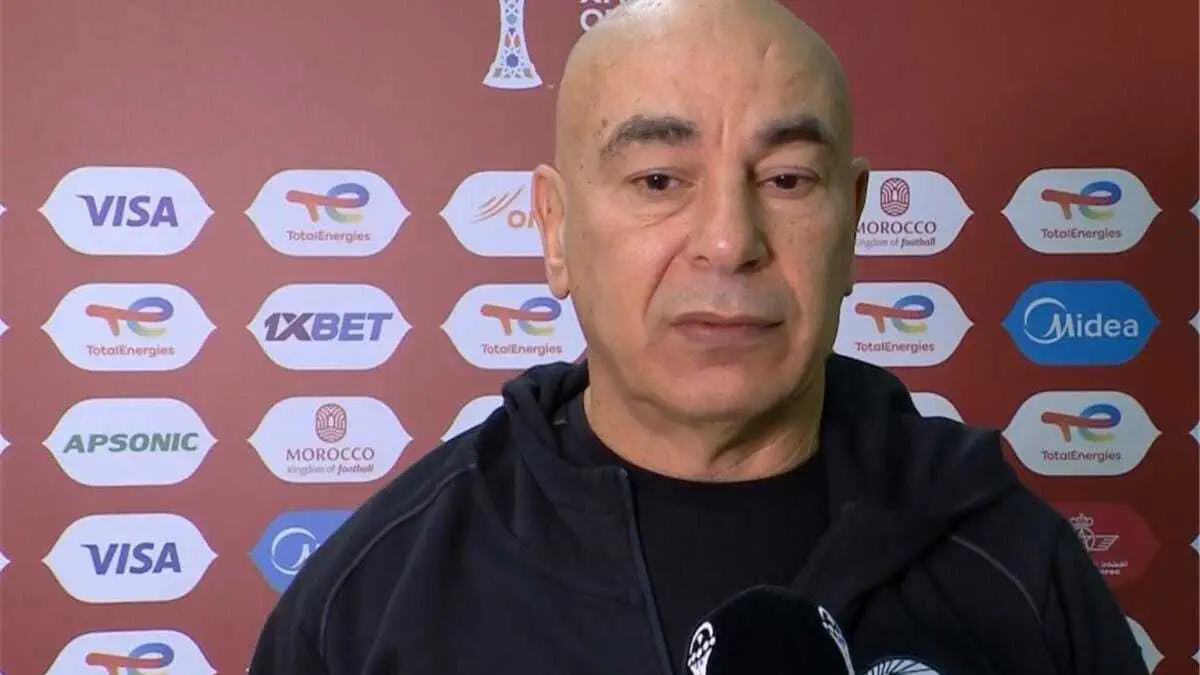
The clearest impression, aside from the issue of results, is that the real problem facing the Egypt national team during the recent international break was not the results as much as the way Hossam Hassan and his coaching staff dealt with the players.
Egypt drew with Angola in Cairo, then secured a big away win over South Sudan before losing to South Africa in Cairo. Naturally, the results were not ideal, but they were not disastrous in themselves and could have passed without major concern. The bigger problem, however, was the conduct of Hossam Hassan and Ibrahim Hassan and their poor treatment of a number of players, particularly the stars and senior figures within the national team.
It began with Mohamed El Shenawy, when Hossam Hassan spoke at the press conference before the Angola match, saying words to the effect that El Shenawy’s career had been over and that he was the one who had revived it. The statement caused a major stir among sports fans and widespread resentment, to the extent that Al Ahly issued a statement immediately after the match condemning Hossam Hassan’s comments and stressing that El Shenawy is one of the national team’s captains and should not be spoken about in that way. Afterward, before the South Sudan match, Hossam Hassan tried to emphasize his appreciation for Mohamed El Shenawy, but the damage had already been done.
The El Shenawy crisis was not the only one. The most prominent case involved Mohamed Salah. Salah had just come off a spell at Trabzonspor, where he had delivered an outstanding performance, scoring three goals and providing an assist in a match against Galatasaray. He then started against Angola in Cairo before being substituted around the 60th minute. From a technical standpoint, the substitution raised major questions because, regardless of the circumstances of the match, Mohamed Salah remains a player capable of making the difference at any moment.
The following day, Salah left the national team camp. According to the official statement issued by the Football Association, this was coordinated with the coaching staff on the grounds that he would be unable to play in the South Sudan match because it was being held on an artificial-turf pitch, with fears that his injury could worsen. However, he also did not take part in the match against South Africa.
From that point, numerous reports began to emerge from behind the scenes about disagreements, not only because of the decision to substitute Salah, but also because of the way Hossam Hassan generally dealt with the players during the camp.
The third victim was Mohamed Abdelmonem. The player had only recently returned from an anterior cruciate ligament injury, yet Hossam Hassan had previously relied on him as one of the leading defenders after Hamdy Fathy and Yasser Ibrahim.
In the Angola match, with Hamdy Fathy absent, Abdelmonem was expected to receive a greater opportunity, but he remained out of the lineup while Rami Rabia started and Hossam Abdelmaguid sat beside him.
In the South Sudan match, after Mohamed Salah was ruled out, Mohamed Abdelmonem informed the coaching staff that he would also be unable to play on artificial turf given his recent return from an anterior cruciate ligament injury. This was especially significant because his French club had expressed reservations about his playing on this type of surface.
In the end, Abdelmonem was also left out of the friendly against South Africa. Thus, a third crisis emerged, linked to the coaching staff’s handling of its relationship with the players.
But the matter did not end there. After the South Africa match, or in its aftermath, Hossam Hassan went over to Hamza Abdelkarim, who had come on for the final 10 minutes and managed to show some threat in front of the opposition goal, and began sharply reprimanding him, demanding that he finish attacks and shoot. The scene was uncomfortable, especially as Hossam Hassan did not shake his hand, while Hamza Abdelkarim himself appeared shocked. The footage spread, and Spanish newspapers covered it, discussing Hossam Hassan’s treatment of a young player and emerging talent.
As a result, we are looking at roughly four different cases: Mohamed El Shenawy, Mohamed Salah, Mohamed Abdelmonem and Hamza Abdelkarim. Therefore, the main issue during the recent international break was not the results as much as the Egypt national team coaching staff’s poor management of its relationship with the players, particularly the stars, captains and high-profile figures such as Mohamed Salah, Mohamed El Shenawy and Mohamed Abdelmonem, as well as emerging talent Hamza Abdelkarim. That was the dominant feeling surrounding the team, more than the results themselves.
Naturally, the results helped intensify the crisis. The draw with Angola in Cairo and the defeat by South Africa in Cairo, even though the match was a friendly and South Africa did not field its full-strength lineup, all added to the criticism. But perhaps all of this could have passed without major consequences if there had not already been a state of tension within the national team.
Hossam Hassan has become his own enemy
When a person antagonizes everyone around him, he ultimately antagonizes himself because he gradually loses every form of support and backing. Hossam Hassan does not currently have a strong popular or official base supporting him. For a long time, he has lost a significant portion of the Zamalek fan base because of various positions linked to his player selections and his failure to rely on certain players whom Zamalek supporters believe deserve an opportunity.
Zamalek supporters already feel that there is a problem between him and the club and some of its players. This period then added Al Ahly supporters to those alienated from him, particularly after his comments about Mohamed El Shenawy, the captain of Al Ahly and the national team. Even if Al Ahly fans themselves sometimes criticize El Shenawy, they certainly will not accept the national team coach speaking about him in that manner in front of everyone.
There may be old grievances between Hossam Hassan and some players dating back to the World Cup or even earlier, but that does not justify the national team coach coming out and speaking in this way about one of the team’s captains. Al Ahly itself further escalated the crisis by issuing an official statement in response to Hossam Hassan’s comments.
Then came the Mohamed Salah crisis. When all of this happens with a player of Mohamed Salah’s stature and value, it is naturally more sensitive. Hossam Hassan not only lost the support of the fans, but also some official backing within the Football Association, particularly as further disagreements emerged during the national team’s trip to South Sudan.
There was a clear dispute between Hossam Hassan and Ibrahim Hassan, or the coaching staff in general, and Khaled El-Dirandaly, the head of the national team delegation and a member of the Football Association. This was not merely a rumor; there were signs of genuine tension. One such sign was that the statement announcing the national team delegation’s arrival in South Sudan referred to the delegation as being led by Hossam Hassan and Ibrahim Hassan, even though Khaled El-Dirandaly was the head of the delegation. Khaled El-Dirandaly himself then spoke about unsatisfactory treatment by the coaching staff, stressing that what had happened was inappropriate and unacceptable. This is very important because we are not talking here about leaked information or accounts from unknown sources, but rather statements made by an official within the Football Association itself.
Hossam Hassan therefore found himself facing more than one side: part of the Zamalek fan base, Al Ahly supporters, some national team stars, the Football Association, as well as media criticism. All of this happened at a time when the Football Association had renewed its confidence in him, and when the team’s good results at the beginning had given the coaching staff a degree of security, meaning there was no real basis for discussing his dismissal. The problem, however, is that Hossam Hassan appears unable to preserve the successes he achieves.
Ultimately, he is his own enemy because every time he clashes with an entity, he loses some of the support he may need later. As disagreements multiply around him, it becomes difficult for him to find a popular, fan-based or official backing that will defend and support him. On one hand, he is losing some Zamalek supporters; on the other, he is losing part of the Al Ahly fan base. He is clashing with major players such as Mohamed Salah and Mohamed El Shenawy, crises are emerging with other players such as Mohamed Abdelmonem and Hamza Abdelkarim, and his relationship with Football Association officials is becoming strained. At that point, the problem becomes bigger than just the result of a match.
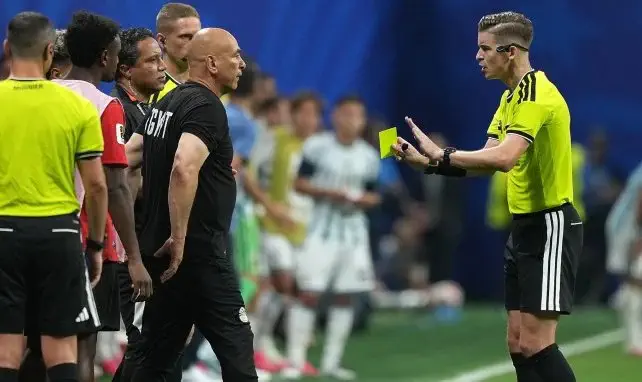
The problem runs deeper than the recent international break
For years, Hossam Hassan has had a clear problem dealing with others, whether the media, players or officials. He previously spoke, for example, about Ahmed Hegazi and his chances of returning to the national team in a harsh manner, saying that his chance was no more than one percent. This is not an appropriate way to deal with a player who was one of Egypt’s national team captains. The same thing happened with Mostafa Mohamed, when he spoke about the number of foreign-based players in the national team in a way that diminished the player’s value, saying that the team had two professional players and a quarter of a professional player, referring to Mohamed Salah, Omar Marmoush and then Mostafa Mohamed.
These comments may seem incidental, but they reveal a bigger problem in the coach’s way of dealing with his players. The irony is that during the last World Cup period, Hossam Hassan appeared to be an entirely different person. People hoped that this period would mark a genuine change in his approach to dealing with the media and players. His statements were measured, his words were carefully considered, and he did not focus on himself and his achievements in the way the public had become accustomed to.
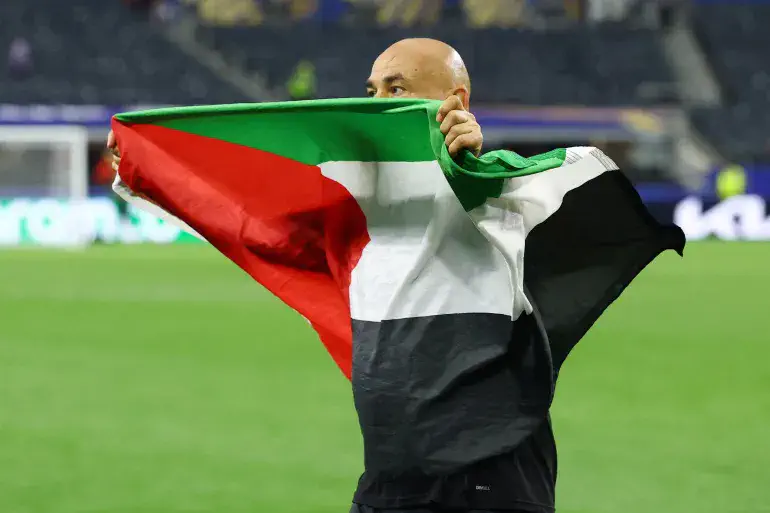
Perhaps the clearest example was the press conference before the Argentina match. The entire world expected Hossam Hassan to speak about Messi, the match, himself and his experience, especially since he is known for his strong ego and his constant talk about his achievements. The surprise, however, was that he spoke about the Palestinian cause and support for the Palestinian people. The press conference was highly moving and led many people to view him differently. The World Cup period seemed like a parallel universe; many people could not believe that this was the same Hossam Hassan known for his harsh statements and repeated problems with the media and players. That is why many believed this phase might be a sign of hope that he had genuinely changed and become calmer and more balanced in dealing with others. It is now clear, however, that nothing fundamental has changed.
Dismissal on the horizon
A person may change some details, but it is difficult to change their basic nature. Hossam Hassan, specifically, has carried this personality from his days as a young player to the present, for more than 30 years. That is why I believe that if the current crisis passes without Hossam Hassan being dismissed, it may pave the way for his dismissal in the near future. Not necessarily because of poor results, but because of poor management of media affairs, poor treatment of players, ongoing tension with Football Association officials, and the many clashes and crises. The problem is not one match the national team lost or one match it drew. The problem is that Hossam Hassan appears to be entering into successive clashes with everyone, and may ultimately find himself alone, without sufficient popular, official or media support. This, specifically, could bring his time with the Egypt national team to an end. In short: Hossam Hassan does not need an outside enemy; the biggest threat to his continuation with the Egypt national team may be himself.
By Ahmed Mansi


Interviews
Today at 03:34
Europe
Yesterday at 12:33
Interviews
01 October 2026
Africa
24 September 2026
Africa
24 September 2026