The World Cup come and go, but for African national teams, the struggle to pull off an upset against the European powerhouses persists—especially due to difficulties in handling the closing moments of matches.
The final minutes have become a historic curse for African teams at the World Cup. From Lothar Matthäus’s free-kick against Morocco in 1986 (87th minute) to Gary Lineker’s penalties against Cameroon in 1990, cruel scenarios just keep repeating themselves.
But beyond fate or a mere mental lapse, this phenomenon is mainly mechanical: it's the collapse of information processing speed (IPS) caused by cognitive fatigue and biological stress.
The latest clashes at this 2026 World Cup provide clinical evidence.
To get inside the mind of an elite player during those decisive final minutes, Foot Africa reached out to Eshraf Kanfoud, a Neuro Performance expert for top-level footballers and former mental coach for the Tunisian national team, who graciously shared her analysis of this phenomenon.
The knockout phase of this 2026 World Cup is a textbook case for performance experts, with two identical scenarios and two clear neurobiological tipping points:
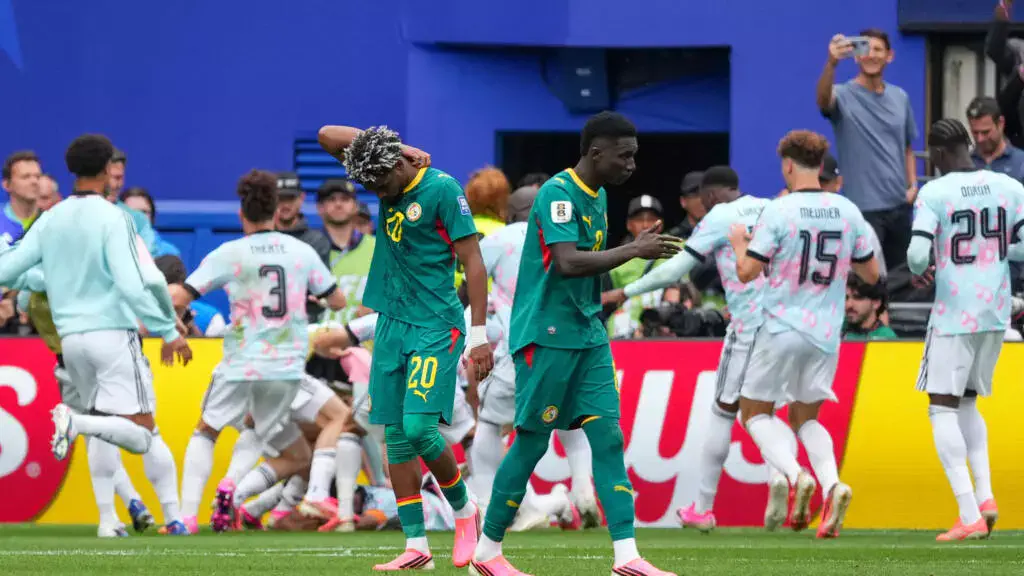
Senegal vs Belgium (2-3, AET): Leading 2–0 in the 51st minute thanks to Diarra and Sarr brings enormous emotional pressure. Holding that scoreline requires constant vigilance, which overloads the prefrontal cortex. In the 86th minute, the first goal for the opposition hits like a shock to the central nervous system (CNS).
In just three minutes, defensive transitions slow down: visual reaction time increases by a few milliseconds, enough to concede the second goal (89th minute) before the final blow in extra time.
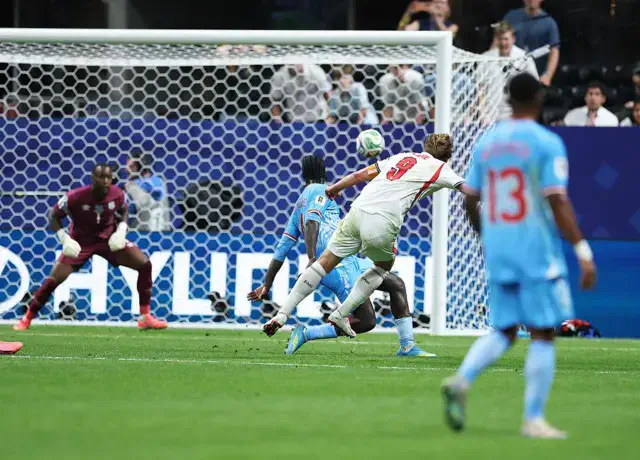
DR Congo vs England (1-2): Scoring in the 7th minute through Cipenga meant enduring the opponent’s tempo for nearly 80 minutes. The Leopards’ defensive wall was exceptionally disciplined.
But the metabolic cost of that concentration is enormous. By the 75th minute, central fatigue takes over: a drop in brain glucose slows decision-making, creating micro-lapses in positioning that seal the match in the dying moments.
When a match enters 'money time,' elite football is no longer played with the feet, but with the central nervous system’s ability to process data in a chaotic environment.
The chain of decision-making collapse unfolds as follows: Accumulated Physical Fatigue ➔ Prefrontal Cortex Overload ➔ Decreased Processing Speed (IPS) ➔ Micro-decision Delays ➔ Conceded Goal.
Prefrontal Cortex overload: This is the seat of tactical decision-making and inhibitory control (staying calm and composed).
After 80 minutes of intense effort, if synaptic plasticity is not trained for computational fatigue, the brain defaults to the simplest solution, often the least effective.
The drop in IPS (Information Processing Speed): A tired player sees the ball, but their brain takes 150 milliseconds longer to analyze the trajectory or the striker’s movement.
Against world-class attackers, that delay spells elimination.
Lack of crisis neurological scripts: When a team is under pressure, its nervous system must switch to high-intensity automated routines.
Without a protocol for anchoring and regulating biofeedback (heart rate, hyper-focused vision), the leading team unconsciously panics in an attempt to "protect" its lead.
Historical records from the World Cup show that traditional technical-tactical work at club or national team level is no longer enough at this level of competition.
To take the next step and stop suffering late-match heartbreak, national team staff need to approach neuro-performance as a quantitative science.
It starts with a complete neurological audit of match situations: assess how key players react with a heart rate above 180 bpm, measure their residual cognitive fatigue at halftime, and map their stress profiles.
To keep clarity from evaporating in the final minutes, developing specific neuroplasticity protocols—training the brain to make critical decisions when utterly exhausted—is the only key.
As long as staff treat these eliminations as bad luck or a lack of "grinta," the same neurobiological causes will, inevitably, keep producing the same results on the pitch.
Imed Ben Amara - bilingual sports writer and web editor with experience in football content creation. Since 2021, he has contributed to Foot Africa, providing news coverage and analysis.