


South Africa focus: Bafana Bafana, the return of the Rainbow Nation
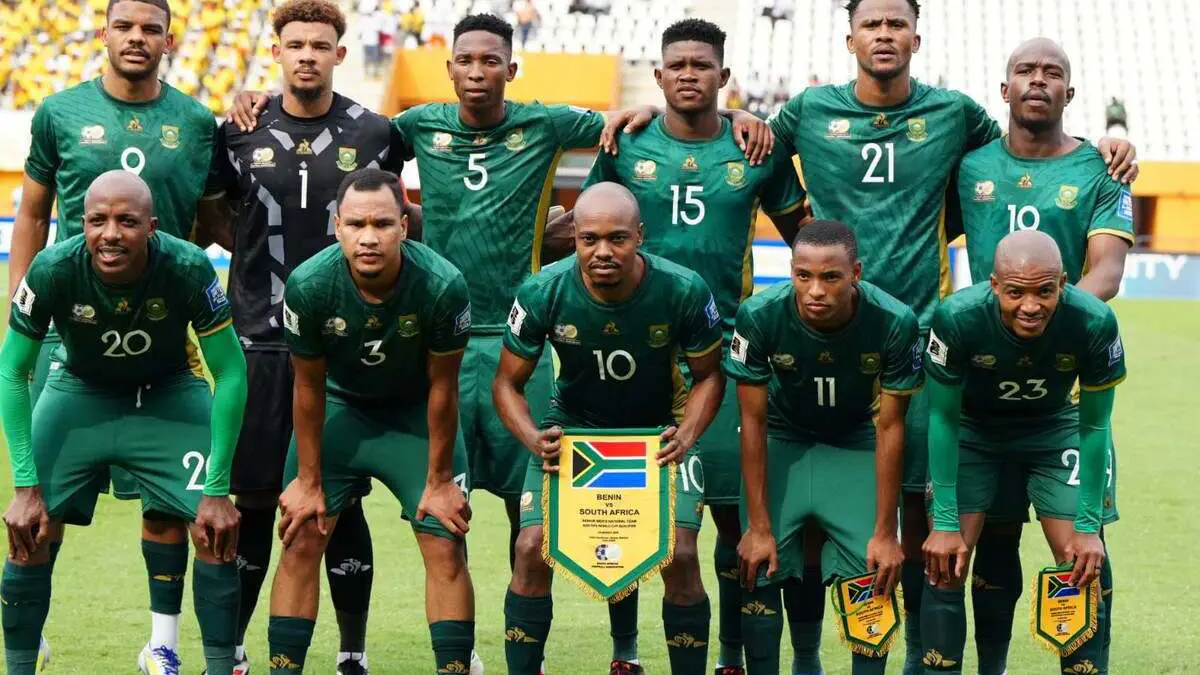
Sixteen years after their last World Cup appearance, Bafana Bafana are back on the global stage, aiming to make history.
Bafana Bafana, which means "the boys" in Zulu, return to the World Cup after a long absence since the 2010 edition held on home soil. This comeback marks the rebuilding of a squad that has long searched for stability. Under Belgian head coach Hugo Broos, the South Africans have slowly rediscovered a clear identity. Tactical discipline, solidarity, and collective organization have become the foundations of a team now respected across the African continent.
Road to the World Cup
Bafana Bafana’s qualification came down to the wire after a campaign where every matchday had a decisive impact on the final standings. In an especially tight group, South Africa had to contend with constant pressure from Nigeria and Benin, two direct rivals who were also gunning for top spot.
The race quickly settled into a three-way battle at the top. The South Africans built their advantage through superior consistency in so-called "winnable" matches, carefully avoiding slip-ups at home. This management of less high-profile games made the difference over the long run.
As the campaign progressed, Bafana Bafana pulled ahead, stringing together positive results just as their competitors dropped crucial points. The turning point came in the final stretch: a convincing 3-0 victory over Rwanda in their last qualifier, combined with a favorable result in the group’s other fixture, sealed first place once and for all.
Behind them, Nigeria and Benin kept up the pressure for much of the campaign, alternating between strong performances and more uneven spells, but ultimately couldn’t break the momentum built by the South Africans. The final gap in the standings reflects a campaign controlled in the key moments, more than outright domination.
Even when faced with an administrative hiccup during the campaign, the squad stayed focused on the essentials. This ability to absorb tension without losing sight of their qualification goal has cemented their image as a more mature, structured team.
Group A fixtures
Bafana Bafana’s return to the 2026 World Cup is loaded with symbolism and memories. In their opening match, South Africa will face Mexico—a clash that echoes the past. Sixteen years after the 2010 World Cup on home turf, these two nations meet again, this time at the Estadio Azteca, in an opener that will inevitably revive memories of Siphiwe Tshabalala and the first goal of the tournament scored by South Africa on home soil.
After this emotionally and historically charged opener, Bafana Bafana must quickly shift gears to take on the Czech Republic in a potentially decisive match for their campaign. The group stage will conclude in Monterrey against South Korea—a fixture that could decide their World Cup fate in a group where every point will matter.
Star player: Ronwen Williams
Bafana Bafana captain Ronwen Williams now embodies the stability and maturity of the South African squad. An experienced keeper and a respected leader in the dressing room, he has become one of the key faces of the team’s revival under Hugo Broos.
His importance goes far beyond his shot-stopping. Williams is a continental reference and took a major step forward in 2024 at the Africa Cup of Nations, where he was named best goalkeeper of the tournament. His performances—marked by decisive saves and a commanding presence in knockout matches—have cemented his status among Africa’s elite keepers.
In this new era, Williams is more than just a reliable goalkeeper: he is a true locker room leader, the symbol of a South African team that has rediscovered its confidence and ambition on the international stage.
Profile: head coach Hugo Broos
Since taking charge of Bafana Bafana in 2021, Hugo Broos has rapidly restructured a South African side desperate for stability. In just a few years, the Belgian tactician has turned an inconsistent squad into an organized, competitive, and disciplined team capable of qualifying for the World Cup again after more than a decade away.
Before his South African adventure, Broos had already built a strong reputation on the African continent. After a career in Belgium, where he managed top clubs like Club Brugge and Anderlecht, he shifted his focus to Africa for a pivotal chapter.
His greatest triumph came with Cameroon, winning the 2017 Africa Cup of Nations—a feat that confirmed his ability to build solid teams in demanding environments. That experience has further shaped his profile as a coach who can handle the pressures of international football and complex environments.
In South Africa, he has implemented the same philosophy: tactical discipline, stability, and long-term trust. Broos has notably chosen to rely on a majority of players from the domestic league, strengthening the group’s cohesion and forging a clear playing identity.
Under his leadership, Bafana Bafana have regained the structure and credibility needed to return to the world stage with renewed ambition.
Tactical analysis
Bafana Bafana are built on a disciplined and structured organization. The team plays with a compact block, prioritizing defensive solidity and tight space management.
Going forward, the side relies on quick transitions and rapid surges into attack. Rather than dominating possession, South Africa focuses on efficiency and collective discipline to compete with the world’s top sides.
Strengths and weaknesses
Bafana Bafana approach this World Cup with a clear profile, built around a solid squad meticulously shaped by Hugo Broos. Above all, the team stands out for its well-drilled tactical setup, the result of several years of continuous work. The players know their roles, the system is ingrained, and group cohesion is one of their main strengths.
This stability is reinforced by a core of players from the local league, who play together throughout the season. That familiarity helps build chemistry and strengthens their collective balance. Add to that the strong leadership of Ronwen Williams, a true anchor in high-pressure moments and the guarantee of defensive composure.
But this structured collective also has its limits. One of South Africa’s main weaknesses remains a lack of experience at the highest European level, where much of world football’s intensity and tactical mastery is set. This sometimes shows in their difficulty competing with highly technical opponents used to the biggest stages.
Finally, Bafana Bafana are still learning on the world stage. Their dependence on collective organization, rather than individual stars who can change a game single-handedly, could become a handicap in tight matches. Add to that limited experience of major international tournaments—a factor that could weigh heavily at critical moments in the competition.
Tournament prediction
South Africa approach this World Cup with a clear goal: to finally get past the group stage, a feat they have never managed before. For Bafana Bafana, this edition is as much a sporting challenge as a test of maturity against the world’s elite.
The fixture list points to a tough road from the outset. The opening clash with Mexico will immediately set the tone and reveal the group’s resilience under hostile conditions. In this context, every point will count, and how they manage the emotional intensity of that first match could prove decisive.
The showdown against South Korea then looms as a potential turning point in the group. It’s often in these closely fought games that qualification or elimination is decided. Finally, the match against the Czech Republic will wrap up a group stage in which even the slightest slip could be fatal.
In this context, the realistic goal for Bafana Bafana is to stay in contention for a qualifying spot right up to the final matchday. The dream scenario, of course, would see South Africa clinch a historic place in the round of 16—marking a major milestone in their World Cup history.
Full squad list
Goalkeepers: Ronwen Williams, Ricardo Goss, Sipho Chaine
Defenders: Khuliso Mudau, Nkosinathi Sibisi, Aubrey Modiba, Ime Okon, Bradley Cross, Khulumani Ndamane, Olwethu Makhanya
Midfielders: Teboho Mokoena, Thalente Mbatha, Jayden Adams, Sphephelo Sithole
Forwards: Lyle Foster, Oswin Appollis, Relebohile Mofokeng, Evidence Makgopa, Themba Zwane, Iqraam Rayners


Africa
24 September 2026
Africa
24 September 2026

Europe
24 September 2026
AFCON
24 September 2026
Europe
22 September 2026