


Spotlight on DR Congo: Sébastien Desabre's Leopards dream of a historic World Cup 2026 run
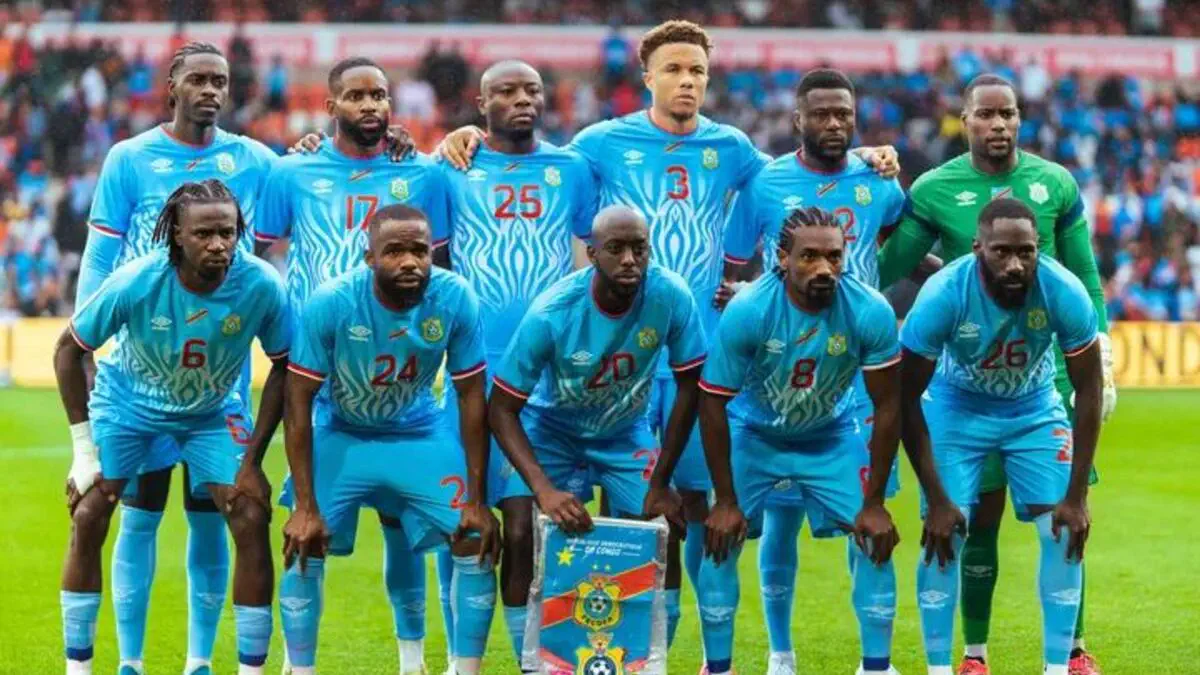
For the first time since 1974, DR Congo will compete in a FIFA World Cup. This historic qualification rewards several years of rebuilding under Sébastien Desabre.
The Leopards are back on football’s grandest stage. Fifty-two years after their sole appearance as Zaire in 1974, the Congolese are returning to the World Cup, determined to turn the page on a painful chapter in their history.
Under Sébastien Desabre’s leadership, DR Congo has rediscovered a strong identity built on collective discipline, commitment, and efficiency. Today, they're among Africa’s most competitive nations and are eager to show that their return is far from a mere symbolic event.
Road to the World Cup
DR Congo’s qualification for the 2026 World Cup was forged through a campaign filled with obstacles. Drawn in Group B of African qualifiers alongside Senegal, Sudan, Mauritania, Togo, and South Sudan, the Leopards spent much of the race chasing the Teranga Lions. Despite an opening defeat in Sudan, Desabre’s men rallied to finish second with 22 points, just behind Senegal (24), clinching one of the continent’s best playoff spots.
What followed was nothing short of an epic. In the African playoff semifinals, Chancel Mbemba clinched victory against Cameroon in stoppage time. Just days later, DR Congo knocked out Nigeria on penalties after a 1-1 draw.
The final hurdle awaited in Mexico, where the Leopards faced Jamaica in the intercontinental playoff. After extra time, Axel Tuanzebe scored the decisive goal in the 100th minute, sending DR Congo to their first World Cup since 1974.
This qualification was achieved through courage, resilience, and collective strength, despite preparations disrupted by various health and logistical challenges.
A tough Group K for the Leopards
The draw has not been kind to the Leopards. For their grand return to the World Cup after 52 years, Sébastien Desabre’s side will kick off against the group’s toughest opponent: Portugal. Against a team used to the biggest international stages, DR Congo will have to quickly find their footing and aim to spring an immediate surprise.
The second match against Colombia could already prove decisive in the race for qualification. Technically solid and deadly on the break, the South Americans pose another major challenge for the Congolese, who will likely need a positive result to keep their hopes alive.
Finally, on June 27 in Atlanta, the Leopards will close out their group stage against Uzbekistan. On paper, this is the most accessible opponent, but also the match that could decide DR Congo’s fate in the tournament. With the new 48-team format and some third-place teams advancing, this final game could feel like a do-or-die showdown.
To reach the round of 16, the Congolese will likely need to pick up points against one of the group’s two giants before playing for their future against the Uzbeks.
Chancel Mbemba, the Leopards' leader
If one face symbolizes DR Congo’s renaissance, it’s Chancel Mbemba. Captain for several years, the central defender embodies the experience, leadership, and resilience of a generation that brought the Leopards back to the world stage after more than half a century away.
Respected by teammates and adored by fans, Mbemba is the cornerstone around which Sébastien Desabre has built his squad. His influence goes far beyond the pitch: he is the locker room’s voice and a key guardian of the team’s collective identity.
The qualifying campaign once again showcased the captain’s importance. In the African playoffs against Cameroon, it was Mbemba who scored the stoppage-time winner, clinching a historic playoff final berth for DR Congo.
Having played in several top European leagues, Mbemba brings vital international experience to the squad. Used to high-intensity encounters, he’ll be tasked with guiding a team—most of whom are experiencing the World Cup environment for the first time.
At 31, Chancel Mbemba is likely heading into the biggest occasion of his international career. After past qualifying heartbreaks and helping rebuild Congolese football, he finally gets the chance to lead his country onto football’s most prestigious stage.
Sébastien Desabre, the architect of Congo’s rebirth
When Sébastien Desabre took charge of DR Congo in August 2022, the Leopards were in a period of uncertainty. Eliminated from the 2022 World Cup and struggling for convincing results, DR Congo failed to harness the full potential of its deep talent pool.
Four years later, the transformation is remarkable. Under his guidance, the Leopards have rediscovered a clear playing identity, a stability rarely seen in recent years, and—most importantly—a World Cup spot for the first time since 1974. This historic qualification is the culmination of the French coach’s work.
Born in Salon-de-Provence, France, Sébastien Desabre has forged a strong reputation across Africa. Before arriving in DR Congo, he managed several clubs and national teams around the continent, including in Ivory Coast, Cameroon, Egypt, and Uganda.
This experience has given him deep insight into the realities of African football. Used to working in challenging environments, he’s learned to get the best out of squads often composed of players from vastly different leagues.
His stint with Uganda, whom he led to the round of 16 at AFCON 2019, already proved his ability to build competitive teams with limited resources.
Since his arrival, Desabre has imposed a simple yet effective philosophy: organization, rigor, and solidarity. Rather than relying solely on individuals, he has built a collective capable of competing with Africa’s elite. His team stands out for its compact shape, tactical discipline, and ability to exploit space on the counter.
The French coach has also fostered strong cohesion between established veterans and the many dual nationals who have strengthened the squad. This chemistry is now one of the Leopards’ main assets.
Sébastien Desabre is set for the biggest challenge of his managerial career. After more than a decade roaming the continent, he will finally lead a national team at a World Cup finals.
Tactical analysis
DR Congo typically lines up in a flexible system, often close to a 4-2-3-1 or 4-3-3. The defensive block remains compact and tough to break down. Quick transitions are one of the team’s main attacking weapons.
The flanks play a crucial role in the game plan, particularly thanks to the forward surges of Arthur Masuaku and Aaron Wan-Bissaka. Up front, Yoane Wissa’s pace and Théo Bongonda’s movement create dangerous counter-attacking opportunities.
This team prioritizes efficiency over possession.
A squad forged by adversity
DR Congo arrives at the 2026 World Cup with a unique profile: a team built through hardship but strengthened by challenges. Under Sébastien Desabre, the Leopards have developed a clear identity, capable of upsetting higher-ranked opponents on paper.
One of DR Congo’s main assets is its mental strength. Time and again during qualifiers and playoffs, the Leopards have turned around dire situations or snatched results in the dying moments. This ability to withstand pressure has become a true hallmark of the squad.
Even if DR Congo lacks World Cup experience, the squad features several players used to high-stakes matches at club and international level. The playoffs against Cameroon and Nigeria, in particular, revealed a team capable of keeping its cool in the tensest moments.
The defensive unit is one of the team’s strongest points. Led by Chancel Mbemba, the back line combines experience, aggression, and positional sense. Around him, complementary profiles help DR Congo stay compact and hard to break down.
Since Desabre’s arrival, the group has gained stability. The team’s patterns are well established, and the continuity in selection has enabled the formation of a true collective identity. This cohesion translates into great tactical discipline and a strong team spirit.
DR Congo also boasts players capable of turning a game with a single action. Between the forwards’ pace, the technical quality of certain midfielders, and the physical impact of key players, the Leopards have several offensive weapons to surprise their opponents.
Lack of experience at the highest level
DR Congo’s main limitation remains its lack of World Cup experience. Most players will be discovering the intensity and pressure of this level for the first time, which could be telling in crucial moments.
The draw was unforgiving. With Portugal and Colombia in the group, DR Congo faces an extremely competitive pool where every mistake can prove costly. This scenario forces the Leopards to deliver near-perfect performances to hope for qualification.
While DR Congo has shown an ability to score in key moments, their attack can be inconsistent. The team sometimes endures sterile periods of domination, where possession does not always translate into clear chances or goals.
Finally, the squad relies heavily on its most experienced players. Should these key figures be out of form or absent, the team could lose balance and effectiveness, especially in high-intensity matches.
Tournament forecast
DR Congo is not among the tournament favorites, but they have several assets that could allow them to spring a surprise.
The main objective will be to finish among the best teams qualifying for the round of 16. The third match against Uzbekistan could be decisive in this regard.
If the Leopards can pick up points against Portugal or Colombia, they’ll have a real shot at making it out of the group stage.
Full 26-man squad
Goalkeepers
- Timothy Fayulu
- Lionel Mpasi
- Mike Epolo
Defenders
- Aaron Wan-Bissaka
- Joris Kayembe
- Arthur Masuaku
- Chancel Mbemba
- Axel Tuanzebe
- Dylan Batubinsika
- Rocky Bushiri
- Steve Kapuadi
- Gédéon Kalulu
Midfielders
- Samuel Moutoussamy
- Charles Pickel
- Noah Sadiki
- Ngal'ayel Mukau
- Edo Kayembe
- Nathanaël Mbuku
- Gaël Kakuta
- Théo Bongonda
- Brian Cipenga
Forwards
- Meschack Elia
- Fiston Mayele
- Cédric Bakambu
- Simon Banza
- Yoane Wissa



Africa
24 September 2026
Africa
24 September 2026

Europe
24 September 2026
AFCON
24 September 2026

Europe
22 September 2026