


Focus on Ghana: the Black Stars on a quest to reclaim their greatness
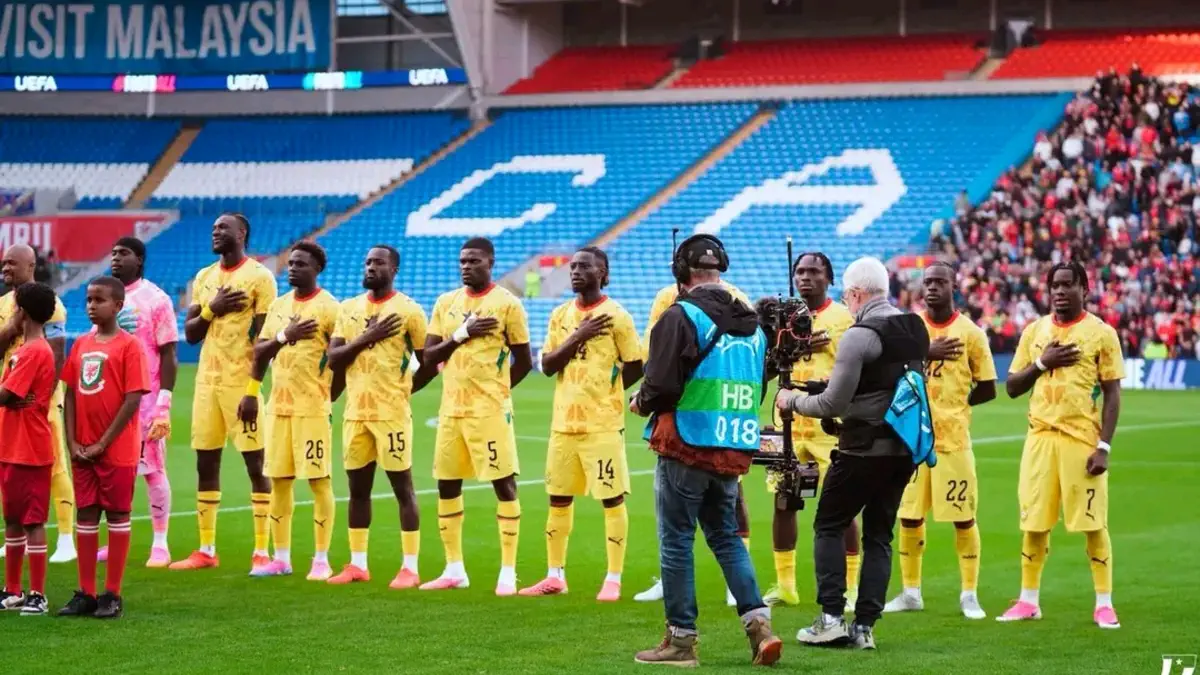
Ghana is gearing up to return to football's grandest stage. Four years after their last appearance, the Black Stars will compete in the fifth World Cup in their history, driven by the ambition to reconnect with a legacy that long made them one of African football's benchmarks.
Some nations simply participate in a World Cup. Others bring a story with them. Ghana belongs in the latter category. In 2026, the Black Stars are back in the world's premier competition with memories of their greatest moments still fresh—especially that legendary 2010 campaign in South Africa, where they came agonizingly close to a historic semi-final berth.
Since then, Ghanaian football has experienced ups and downs. Early exits, coaching changes, and a transitioning generation have at times made the Black Stars seem far from the heights they once reached. Yet, talent has never left this squad.
Powered by a generation blending experience and youth, Ghana arrives in North America determined to remind the world why they remain one of Africa's football giants.
A well-earned qualification
The Black Stars punched their ticket to the 2026 World Cup after a remarkably controlled campaign in Group I of the African qualifiers, facing Ghana, Mali, Madagascar, Comoros, Central African Republic, and Chad.
With eight wins, one draw, and just a single loss in ten matches, Ghana finished top of the group with 25 points, ahead of Madagascar and Mali. Rock solid at home, clinical on the road, and powered by a prolific attack, they gradually took control of a group that was anything but straightforward.
The qualification truly took shape in the second half of the campaign. Otto Addo’s men notched several crucial wins over Madagascar, Mali, and Comoros—their main rivals for top spot. The World Cup berth was finally sealed with two games to spare, allowing the Black Stars to approach the final fixtures of qualifying with calm assurance.
This achievement breathed new life into a squad that had just come off a particularly disappointing 2024 AFCON. Just months after facing criticism and doubt, Ghana reclaimed its place among Africa’s elite at the world’s most prestigious tournament.
Carlos Queiroz: the man for the mission
To guide the Black Stars at the World Cup, the Ghanaian FA opted for experience. At 73, Carlos Queiroz boasts one of international football’s most impressive résumés. The Portuguese coach—former boss of Portugal, Iran, Colombia, and Egypt—has managed at multiple World Cups, earning a reputation for building competitive, well-organized teams capable of standing up to more talented sides.
His arrival in Ghana came under unique circumstances. Just weeks before the tournament, the federation handed him the reins to inject greater stability and experience. Queiroz is the archetype of the pragmatic manager who places supreme importance on collective organization. His teams defend as one, suffer as one, and seize every opportunity.
Throughout his career, he’s shown a knack for building compact, hard-to-break-down units—a quality that could prove invaluable in a particularly tough group stage. His challenge now is clear: turn a talented but sometimes inconsistent squad into a team that can compete with the world’s best.
Jordan Ayew: the heir becomes captain
For years, Jordan Ayew lived in the shadow of his famous name. Son of Abedi Pelé and brother to André Ayew, the striker has patiently built his own career, becoming one of the faces of Ghanaian football. Now captain of the Black Stars, he approaches this World Cup as the team’s natural leader. His role goes far beyond the front line—on the pitch and in the dressing room, his experience is now vital.
With over a hundred caps, Jordan Ayew is among Ghana’s most capped players ever. During qualifying, he was also one of the main architects of their success, thanks to his consistency and clinical finishing. At 34, this World Cup could be his final major international tournament—a perfect chance to leave a lasting mark on Black Stars history.
A team built for transitions
Tactically, Ghana is expected to line up primarily in a 4-2-3-1 or 4-3-3. The squad’s main strength lies in its ability to break forward at speed. With players like Iñaki Williams, Antoine Semenyo, Ernest Nuamah, and Kamaldeen Sulemana, the Black Stars boast enough firepower to trouble any defense.
In midfield, Thomas Partey remains the linchpin. His role will be crucial in balancing the team and linking up play from defense to attack. The defensive setup will, as always, bear the hallmark of Carlos Queiroz: a compact, disciplined, and tough-to-breach block.
This approach could enable Ghana to go toe-to-toe with opponents who, on paper, may seem stronger.
A tough but manageable group
Ghana knows its task is far from easy. The Black Stars will face Panama on June 17 in Toronto, then take on England on June 23 in Boston, before meeting Croatia on June 27 in Philadelphia. The opening match will likely be the most crucial of the group stage—a win over Panama would give Ghana a genuine shot at qualification before taking on the two favorites.
Injuries to several key players are a source of concern. The absence of Mohammed Kudus, in particular, deprives the team of its chief creator and one of its most unpredictable threats. The defense will also need to be more consistent than in recent months if Ghana is to compete with top-class attacks.
But this squad also boasts several major assets: significant experience, blistering pace on the wings, and a competitive culture forged over generations. If the Black Stars can quickly find their rhythm under Queiroz, they could once again become a very tough side to beat.
Tournament prediction
Ghana is not among the favorites at this World Cup. Still, the Black Stars have a squad talented enough to realistically aim for a place in the round of 16. The match against Panama could decide much of their future in the tournament—a win there could open the door for another big run.
Early elimination remains a possibility in such a tough group. But Ghana’s history in major tournaments has often shown that this team is capable of rising to the occasion when least expected.
If Queiroz’s tactical discipline takes hold quickly and the attacking leaders step up, the Black Stars could well deliver another memorable campaign for Africa.
The 26-man squad
Goalkeepers
Benjamin Asare, Lawrence Ati-Zigi, Joseph Anang
Defenders
Baba Abdul Rahman, Gideon Mensah, Marvin Senaya, Alidu Seidu, Abdul Mumin, Jerome Opoku, Jonas Adjetey, Kojo Oppong Peprah, Derrick Luckassen
Midfielders
Thomas Partey, Elisha Owusu, Kwasi Sibo, Augustine Boakye, Caleb Yirenkyi, Abdul Fatawu Issahaku
Forwards
Jordan Ayew, Iñaki Williams, Antoine Semenyo, Ernest Nuamah, Kamaldeen Sulemana, Brandon Thomas-Asante, Prince Kwabena Adu, Christopher Bonsu Baah


Africa
24 September 2026
Africa
24 September 2026

Europe
24 September 2026
AFCON
24 September 2026

Europe
22 September 2026