
Exclusive: What’s really driving Saudi Football? Ben Jacobs reveals the bigger picture
Exclusive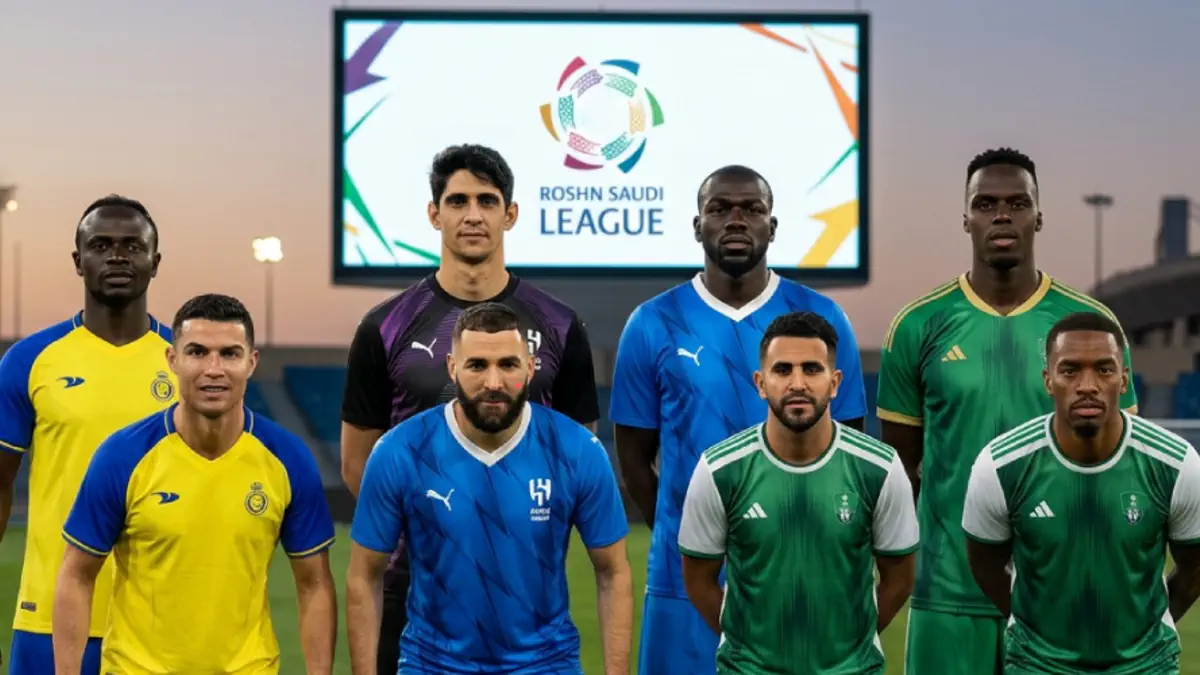
Saudi football’s rapid rise has often been reduced to one idea, money. But according to journalist Ben Jacobs speaking to Foot Africa, the real story is evolving.
The focus is no longer just on transfer spending but on whether Saudi clubs can build a sustainable, competitive football ecosystem.
From record spending to structural ambition
There is no denying the scale of investment. Saudi Pro League clubs spent a record $957 million in the summer of 2023, according to Deloitte reshaping the global transfer market.
But since then, the narrative has shifted. The league’s long term plan now revolves around governance, player development and financial sustainability.
On 6 April 2026 the Ministry of Sport launched the second phase of its Sports Clubs Investment & Privatization Project opening the door to both local and international investors.
This signals a clear transition, from aggressive spending to structured growth.

Building a new football model
Saudi football’s transformation did not happen overnight. The groundwork was laid in 2023 through a major privatization drive.
Clubs such as Al Hilal, Al Nassr, Al Ahli and Al Ittihad were restructured into companies backed by the Public Investment Fund, alongside non profit foundations.
Elsewhere, Al Qadsiah moved under Aramco ownership while NEOM SC promoted to the top flight on 22 April 2025.. represents a longer term development project.
The objective is measurable. Official figures target increase in league revenues from SAR 450 million to over SAR 1.8 billion while the league’s market value is projected to grow from SAR 3 billion to more than SAR 8 billion.
More than a transfer market
For Jacobs, the key point is that Saudi Arabia is trying to build ecosystem, not just dominate transfer headlines.
That includes regulatory controls. Clubs are limited to 10 foreign player, with only eight allowed in matchday squads and two reserved for younger profiles. The league has also introduced sustainability guidelines aimed at aligning spending with sporting value.
This framework challenges the common “football bubble” narrative.
A changing relationship with Europe
Rather than acting purely as a disruptor, Saudi clubs are increasingly part of a wider football economy.
One example came in January 2025 when Al Nassr signed Jhon Duran from Aston Villa for £64 million, a deal that suited both sides. For European clubs, Saudi demand can provide financial flexibility at key moments.
The long term test
The next phase will define whether the project succeeds. Spending alone is no longer the benchmark.
Saudi clubs will be judged on their ability to:
- develop players
- generate independent revenue
- operate as stable football businesses
The early years brought global attention. What follows will determine credibility.
Saudi football announced itself through scale. Its future will depend on structure.



Europe
Today at 10:42

World
31 July 2026

Africa
30 July 2026

Europe
30 July 2026

Europe
30 July 2026

Europe
30 July 2026

World
27 July 2026

Africa
26 July 2026

Africa
13 July 2026

World Cup 2026
11 July 2026


