


Focus on Morocco: The Atlas Lions, a generation at the peak of its powers
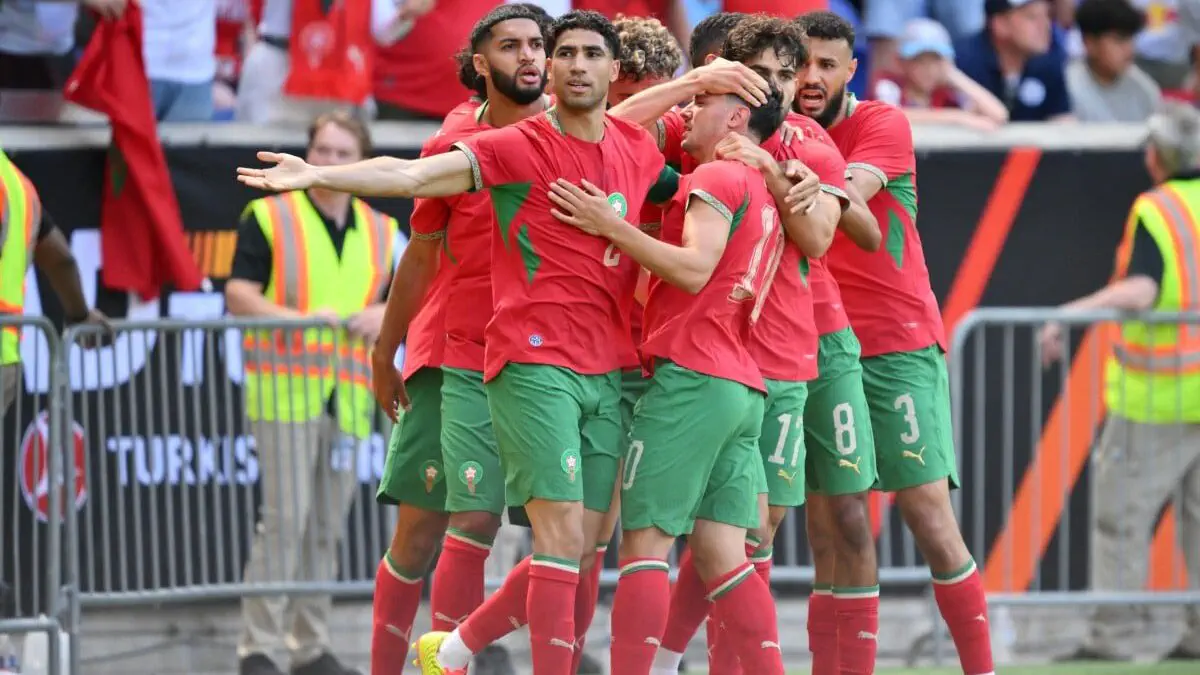
Morocco will compete in a World Cup for the seventh time in its history, and for the third consecutive edition. Four years after their historic feat in Qatar, as the first African semi-finalists in World Cup history, the Atlas Lions return with new ambitions.
They're known as the Atlas Lions. But in 2026, they're no longer the admired outsiders of world football—they've become a benchmark. Since their unforgettable run in Qatar in 2022, where they reached the semi-finals by knocking out Spain and Portugal, Morocco have taken on the status of a team capable of going toe-to-toe with the planet's biggest footballing nations.
This World Cup will mark Morocco’s seventh appearance in a finals tournament. Even more impressive, it’s the third consecutive qualification for the Atlas Lions after the 2018 and 2022 editions. This consistency is a clear testament to the remarkable rise of Moroccan football over the past decade.
Powered by a talented generation blending experience and youth, the Moroccan side is no longer content with simply aiming for the round of 16. Now, they aspire to cement their place among the world’s elite squads.
Road to the World Cup
Morocco stormed through African qualifying with commanding authority. Drawn in Group E alongside Zambia, Tanzania, Niger, Congo, and Eritrea, the Atlas Lions never looked threatened.
Mohamed Ouahbi’s men delivered attacking masterclasses, including a 6-0 demolition of Congo and a 5-0 rout of Niger. On the road, Morocco also showed their dominance with convincing away wins in Tanzania, Zambia, and Niger.
At the end of the campaign, the Lions finished well clear at the top of their group with 24 points and the best goal difference in African qualifying. Qualification was earned with authority and without a hint of doubt.
This dominance confirmed what many already suspected: Morocco is no longer just a continental powerhouse, but a genuine contender on the world stage.
First-round schedule
Morocco has landed in a particularly intriguing group for their 2026 World Cup opener. Facing Brazil, Scotland, and Haiti, the Atlas Lions will need to hit their stride quickly in a group that features a global giant, a European side renowned for discipline, and an ambitious Caribbean squad.
The opening clash has all the makings of an early final. On June 13 at New York’s MetLife Stadium, Mohamed Ouahbi’s men will take on Brazil in one of the most anticipated fixtures of the group stage. This showdown will immediately reveal Morocco’s true ambitions for the tournament. Four years after reaching the semi-finals in Qatar, the Atlas Lions will have the chance to prove they can now look the world’s football giants square in the eye. A positive result against the Seleção could give them a significant psychological edge for the rest of the competition.
Six days later, Morocco will face Scotland at Boston’s Gillette Stadium. On paper, this match could be decisive in the race for qualification. The Scots are traditionally known for their physical commitment, tactical discipline, and ability to make matches tight and cagey. Morocco will need patience and creativity to break down a side likely to focus on defensive organization. This fixture could prove crucial in the final group standings.
Finally, on June 24, the Atlas Lions will close out the group stage against Haiti at Atlanta’s Mercedes-Benz Stadium. While the Haitians may be seen as the group’s outsiders, they remain a team capable of causing problems with their speed and attacking flair. Morocco will need to avoid complacency in what could be a decisive encounter, especially if qualification is still at stake on the final day.
One of Morocco’s advantages lies in the location of their fixtures. All three matches will be played on the U.S. East Coast, minimizing travel and the fatigue associated with long journeys across the vast World Cup host nation. This logistical stability could be a key asset for tournament management.
Star player to watch: Achraf Hakimi
At 27, Achraf Hakimi has become the emblem of this Moroccan generation. Trained at Real Madrid before starring for Borussia Dortmund, Inter Milan, and now Paris Saint-Germain, the right-back is considered one of the best in the world at his position. His pace, work rate, and game-changing ability make him a unique weapon.
As captain and technical leader, Hakimi has earned nearly a hundred caps and boasts significant experience on the biggest international stages. Under Luis Enrique at PSG, he’s developed into an even more versatile player, comfortable operating in central areas to help build play. This tactical evolution could prove invaluable at the World Cup.
If Morocco are to go far, their number 2 must be at his absolute best.
Manager profile: Mohamed Ouahbi
Morocco opened a new chapter in March 2026 by handing the reins to Mohamed Ouahbi. Born in Belgium to Moroccan parents, the 49-year-old coach built a strong reputation in youth development. After many years at Anderlecht’s academy, he joined Morocco’s national setup and led the U20 side to a historic world title in 2025.
His appointment to the senior team embodies the Royal Moroccan Football Federation’s commitment to continuity and nurturing the new generation.
Supported by the likes of João Sacramento, former assistant to José Mourinho and Mauricio Pochettino, Ouahbi advocates for a modern, demanding, and adaptable style tailored to his players’ strengths.
His main challenge will be succeeding Walid Regragui while maintaining the identity that made Morocco historic in 2022.
Tactical analysis
Morocco is expected to line up in a system close to a 4-3-3. Their game is built on a solid defensive structure and rapid attacking transitions. In front of the back line, Sofyan Amrabat plays a crucial balancing role, while Azzedine Ounahi and Bilal El Khannouss inject creativity and fluidity into the passing lanes.
On the flanks, the relentless overlapping runs of Achraf Hakimi and Noussair Mazraoui constantly create numerical superiority. In attack, Brahim Diaz, Soufiane Rahimi, Ayoub El Kaabi, and Abde Ezzalzouli all offer different skill sets, giving Morocco the flexibility to adapt to various match scenarios.
One of this team’s main strengths remains its ability to defend in a compact block before launching lightning-fast counterattacks.
A credible contender, but under pressure
Morocco arrives at the 2026 World Cup with an unprecedented status in its history. Since their remarkable run in Qatar in 2022, the Atlas Lions are no longer seen as a team capable of springing a surprise, but as a side the world’s biggest nations now respect and prepare for in earnest. This new reality brings significant advantages—but also challenges that may weigh on their journey.
Strengths
Morocco’s primary strength lies in its defensive solidity. For years, the Atlas Lions have stood out for their collective organization, tactical discipline, and ability to withstand pressure without breaking. With Yassine Bounou in goal, Nayef Aguerd in central defense, and full-backs Achraf Hakimi and Noussair Mazraoui, Morocco boasts a back line capable of matching the tournament’s best. This defensive stability was key to their 2022 heroics and remains a major asset today.
Experience is another huge advantage. Several core players featured at both the 2018 and 2022 World Cups. Hakimi, Bounou, Amrabat, and Ounahi all know exactly what's required at the highest international level. This experience could make the difference in high-pressure moments, especially in knockout games.
Morocco also benefits from an exceptionally talented generation. Rarely, if ever, have the Atlas Lions had so many players starring in Europe’s top leagues. With Brahim Diaz at Real Madrid, Hakimi at PSG, Mazraoui at Manchester United, and El Khannouss in the Bundesliga, there’s quality across every line.
Finally, squad depth is a real strength. Unlike many African teams that rely heavily on a few individuals, Morocco has plenty of alternatives. This depth allows the coach to tweak tactics based on the opposition and more easily cover for injuries or suspensions.
Weaknesses
Despite their quality, Morocco isn’t without question marks. The first concerns their reliance on Achraf Hakimi. More than just a right-back, the captain has become the team’s driving force. A dip in form or injury to the PSG star could significantly hamper Morocco’s attacking and creative threat.
The recent coaching change is another unknown. Mohamed Ouahbi only took charge a few months before the tournament. Even though he knows Moroccan football inside out, the time he has to imprint his ideas is limited. The transition from the Walid Regragui era to his own vision must be managed flawlessly to avoid a loss of bearings.
Pressure is another major factor. In 2022, Morocco played with the freedom of underdogs. In 2026, expectations are sky-high. Every opponent will now approach the Atlas Lions with far more caution and respect. Managing this new-found status will be one of the tournament’s great psychological challenges.
Finally, some absences deprive the team of additional attacking options. The new generation will have to step up quickly to fill those gaps and maintain the offensive threat seen in recent years.
All in all, Morocco probably boasts the most complete squad in African football heading into this World Cup. But to turn potential into results, the Lions will need to handle expectations, keep their core players fit, and adapt quickly to the demands of a tournament where every detail can decide a destiny.
Tournament prediction
Morocco enters this World Cup with legitimate ambitions. The Atlas Lions have one of the most talented squads in their history and now possess priceless experience on the big stage.
Reaching the round of 16 seems like a bare minimum. If the side maintains its defensive solidity and its leaders deliver, a quarter-final berth looks well within reach.
Beyond that, everything will hinge on the knockout matchups and Morocco’s ability to recapture the intensity that made them so formidable in Qatar.
Full 26-man squad list
Goalkeepers
- Yassine Bounou (Al-Hilal)
- Munir El Kajoui (RS Berkane)
- Ahmed Reda Tagnaouti (FAR Rabat)
Defenders
- Achraf Hakimi (PSG)
- Noussair Mazraoui (Manchester United)
- Nayef Aguerd (Olympique de Marseille)
- Chadi Riad (Crystal Palace)
- Issa Diop (Fulham)
- Anass Salah-Eddine (PSV Eindhoven)
- Mohamed Belammari (Al-Ahly)
- Zakaria El Ouahdi (Sunderland)
- Redouane Halhal (Mechelen)
Midfielders
- Sofyan Amrabat (Fenerbahçe)
- Azzedine Ounahi (Girona)
- Bilal El Khannouss (Stuttgart)
- Ismael Saibari (PSV Eindhoven)
- Neil El Aynaoui (AS Roma)
- Ayyoub Bouaddi (Lille)
- Samir El Mourabet (Strasbourg)
Forwards
- Brahim Diaz (Real Madrid)
- Soufiane Rahimi (Al-Ain)
- Ayoub El Kaabi (Olympiakos)
- Abde Ezzalzouli (Real Betis)
- Chemsdine Talbi (Sunderland)
- Gessime Yassine (Strasbourg)
- Ayoube Amaimouni (Eintracht Frankfurt)


Africa
24 September 2026
Africa
24 September 2026

Europe
24 September 2026
AFCON
24 September 2026

Europe
22 September 2026