
A resounding fall for the 5 time world champion.. Nigeria out of AFCON and the 2027 U17 World Cup
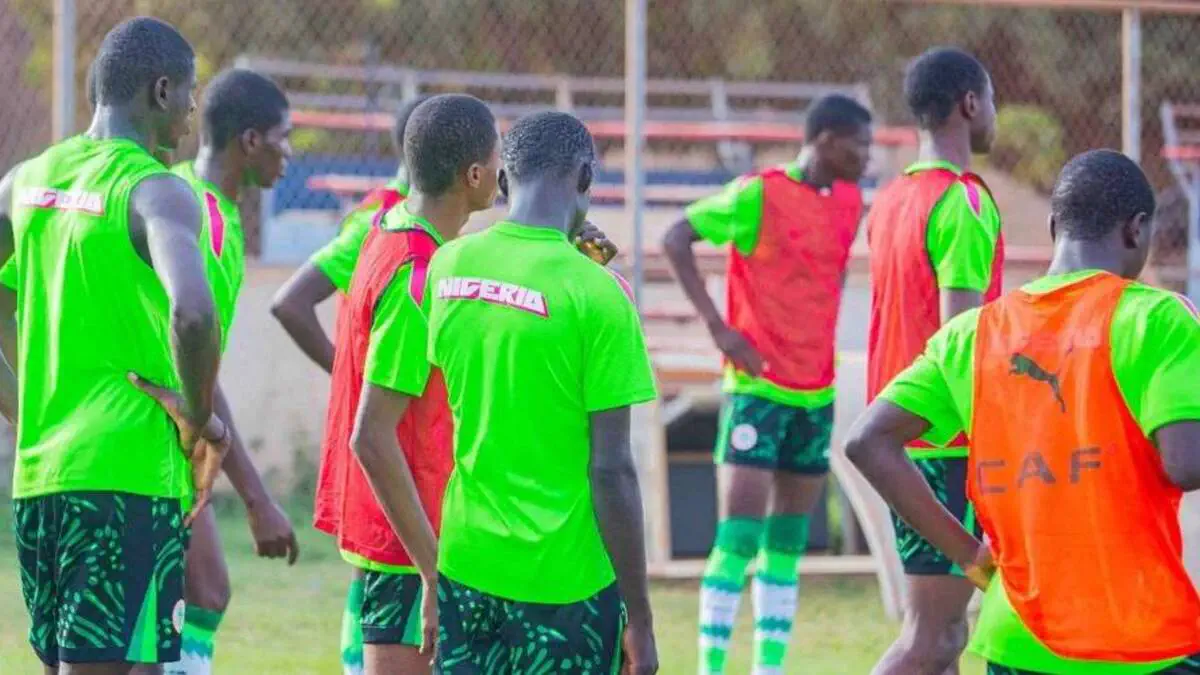
Nigeria have failed to qualify for both the U17 Africa Cup of Nations 2027 and FIFA U17 World Cup after a 1-1 draw against Ivory Coast in Burkina Faso on Saturday 17 October marking another setback for Africa's most successful nation at this age level.
The Golden Eaglets were eliminated from the 2026 WAFU-B U17 Championship after finishing bottom of Group B with just one point from two matches.
The result at the Stade du 4 Août in Ouagadougou ended Nigeria's hopes of reaching the continental tournament and, consequently, the World Cup 2027 in Qatar.
For a country that has won the FIFA U17 World Cup a record five times, the latest failure extends a difficult period in youth international football.
Read Also: From Juba to Finland: Pundit explains why Salah's artificial turf decisions were not contradictory
Nigeria eliminated after dramatic Ivory Coast draw
Nigeria entered Saturday's decisive encounter knowing that only a victory would keep their qualification hopes alive.
Head coach Eboboritse Uwejamomere's side had suffered a 2-1 defeat against Niger in their opening match on 14 October leaving them under pressure against the Ivorians.
Their situation became even more difficult when Alex Fousseni opened the scoring for Ivory Coast in the 16th minute following a counterattack.
Nigeria attempted to respond throughout the match but struggled to break down the Ivorian defence.
Abiodun John eventually equalised in the closing minutes, giving the Golden Eaglets renewed hope of securing the victory they desperately needed.
However, they could not find a second goal.
The Nigeria Football Federation confirmed the team's elimination following the final whistle.
Niger finished top of Group B with four points, Ivory Coast advanced in second place with two while Nigeria ended their campaign with just one.
Niger defeat proves costly for the Golden Eaglets
Nigeria's elimination was shaped by their opening defeat against Niger.
As Foot Africa previously reported, Abdoul Razak Zada gave Niger the lead in the 19th minute before substitute Sofiane Cidiko doubled their advantage in the 87th.
Mubarak Fasiou pulled a goal back for Nigeria deep into stoppage time but the Golden Eaglets were unable to complete a comeback.
The result left them needing to defeat Ivory Coast in their final group match.
Under the WAFU-B qualifying format, the regional finalists secure qualification for the U17 Africa Cup of Nations.
Nigeria's failure to advance from the group therefore ended their continental campaign before the knockout rounds.
Five World Cup titles but no appearance since 2019
The latest disappointment is particularly significant given Nigeria's extraordinary history at U17 level.
The Golden Eaglets remain the most successful team in FIFA U17 World Cup history, having won five titles:
- 1985 – China
- 1993 – Japan
- 2007 – South Korea
- 2013 – United Arab Emirates
- 2015 – Chile
Their most recent triumph came in 2015 when a team featuring future Super Eagles striker Victor Osimhen defeated Mali 2-0 in the final.
Osimhen finished that tournament with a record ten goals, establishing himself as one of Nigeria's most exciting young prospects.
However, the national team's fortunes have changed considerably since that success.
Nigeria last appeared at the U17 World Cup in Brazil in 2019 when they reached the round of 16.
They have failed to return to the competition since, despite FIFA expanding the tournament to 48 teams and introducing an annual format from 2025.
The Golden Eaglets' absence contrasts sharply with their historic dominance, highlighted in Foot Africa's review of the competition's former champions.
What does Nigeria's elimination mean for the 2027 World Cup?
The FIFA U17 World Cup 2027 will take place in Qatar which has been awarded hosting rights for five consecutive editions from 2025 to 2029.
Nigeria's elimination from the WAFU-B qualifiers means they will not reach the African championship that provides the continent's pathway to the global tournament.
Their latest failure raises renewed questions about the country's youth development system and its ability to consistently produce competitive international teams.
While Nigeria continues to develop talented young footballers, its recent qualification record at U17 level has fallen well short of the standards established by previous generations.



Africa
15 October 2026

Africa
14 October 2026

Africa
11 October 2026

Africa
Today at 12:59

Africa
16 October 2026

Africa
15 October 2026

Africa
14 October 2026

Exclusive
Yesterday at 02:00

Africa
14 October 2026

Europe
12 October 2026

Interviews
06 October 2026

Europe
05 October 2026