


Banned at the border: The 2026 World Cup Visa crisis nobody saw coming!
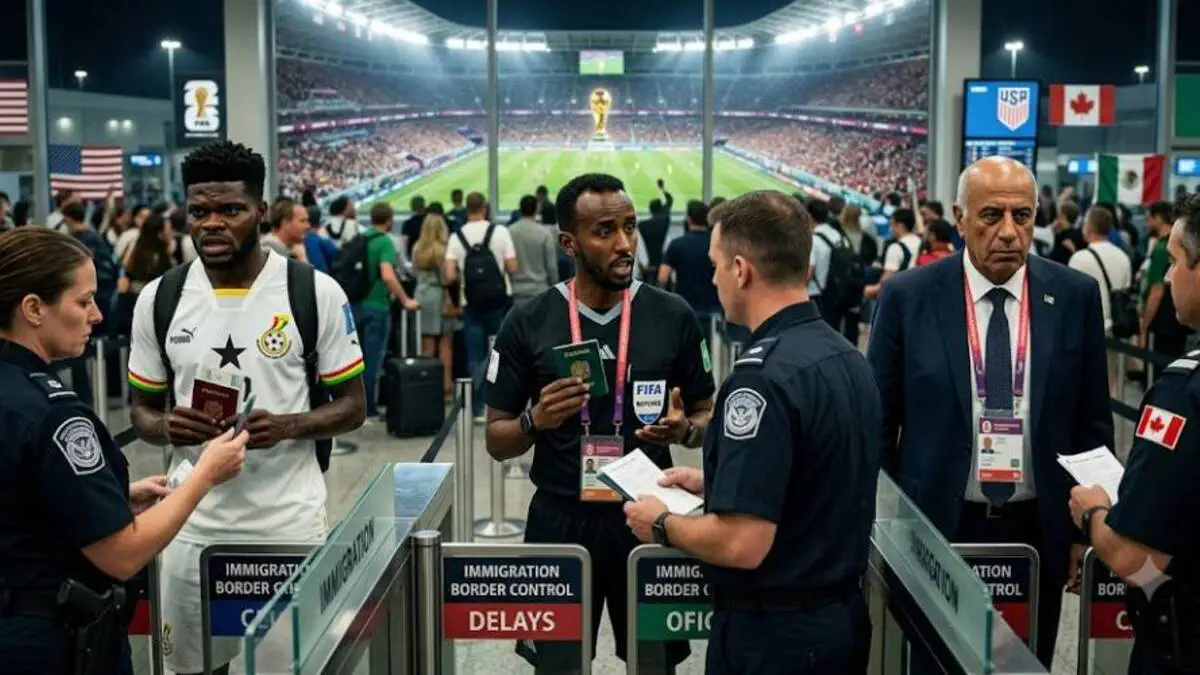


Strict border laws across North America have triggered a 2026 World Cup visa crisis this week blocking elite players and officials from matches.
Read Also: World Cup 2026 pink boots: Why are soccer players wearing Neon Pink cleats?
Canada shuts the door on Ghana's star
The Black Stars suffered a devastating blow just days before their opening clash against Panama, scheduled for 17 June in Toronto.
The Canadian government officially denied entry to crucial midfielder Thomas Partey. The rejection stems from Canada’s rigid immigration policies barring individuals facing ongoing criminal charges.
The 32 year old is currently awaiting a 2027 trial in the United Kingdom regarding sexual assault allegations, charges he vehemently denies.
A geographically splintered campaign
This rejection effectively splits Ghana's tournament strategy in half. While banned from Canadian soil, Partey currently holds a valid United States visa.
He is stationed at the squad's base camp in Boston and remains fully eligible to compete in their remaining Group Stage fixtures against England & Croatia as both matches take place within US borders.
In response, the Ghanaian government filed a fierce official protest on Saturday, 13 June. However according to an official statement, FIFA completely distanced itself from the controversy, firmly declaring that visa approvals remain the exclusive sovereign right of the host nations.
Collateral damage across the tournament
Partey is not the only high profile figure trapped in this tri-nation bureaucratic nightmare. Several key international delegates have hit a brick wall at the border.
One of the most prominent cases involves Somali referee Omar Abdulkadir Artan who was denied entry over security concerns. The decision came as a shock especially since Artan holds a valid visa and was recently named CAF Referee of the Year for 2025 highlighting his growing reputation in African football.
A similar situation affected Jibril Rajoub, president of the Palestinian Football Association. Despite receiving official accreditation from FIFA, Rajoub did not obtain a U.S. visa.
As a result, his presence during the tournament has been limited to matches held in Mexico, one of the co-host nations.
The issue also extends to the Iranian delegation. While players and coaching staff were granted visas, 14 administrative officials were denied entry into the United States. Iranian authorities described the move as “retaliatory behavior” adding another layer of political tension to the tournament.



Africa
18 June 2026

Africa
18 June 2026

Africa
17 June 2026

World Cup 2026
17 June 2026

Africa
Today at 06:16

Africa
Yesterday at 15:56

Africa
Yesterday at 14:29
Transfers
28 September 2026

Africa
Yesterday at 06:35

World
Yesterday at 03:04

World Cup 2026
25 September 2026

World Cup 2026
24 September 2026

Africa
24 September 2026

Africa
24 September 2026

Europe
24 September 2026

AFCON
24 September 2026

Europe
22 September 2026