
Club World Cup, 48-team World Cup, FIFA Forward Enterprise... Infantino's reforms that irritate UEFA
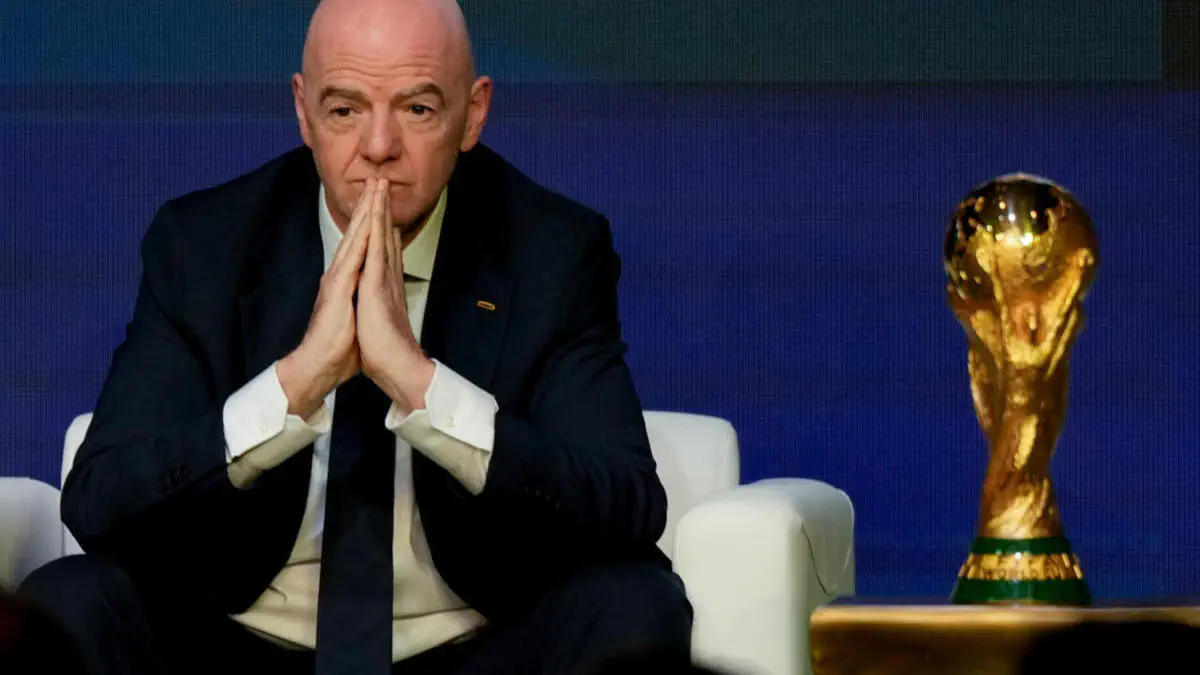
Since taking over as president of FIFA in 2016, Gianni Infantino has profoundly transformed global football. Expansion of competitions, new economic models, development programs, and an ambitious commercial strategy: so many initiatives that have strengthened the global body’s influence, but also heightened tensions with UEFA, now its main counterweight.
Gianni Infantino’s election as FIFA president in February 2016 was supposed to mark a break from the crisis years triggered by the corruption scandal that toppled Sepp Blatter. A former UEFA general secretary, the Italo-Swiss executive seemed like a natural ally for the European organization.
But a decade later, the relationship between the two institutions has deteriorated significantly. Behind disagreements over calendars, competitions, and revenues lies a strategic opposition. FIFA wants to strengthen its role as the decision-making center of global football, while UEFA seeks to protect a European model that concentrates most of the world’s top clubs, best players, and commercial revenues.
A decade of tension between FIFA and UEFA
Since Gianni Infantino took over as FIFA president in 2016, relations between the world body and UEFA have gradually soured. Elected after the scandals that ended the Sepp Blatter era, the Italo-Swiss leader promised to modernize FIFA and boost its role in developing global football.
From the early years of his mandate, Infantino launched a series of reforms aimed at increasing FIFA’s economic and sporting influence. Between 2017 and 2019, the organization notably worked on a new format for the Club World Cup, with the ambition of turning the competition into a major global event capable of generating more revenue.
In 2022, another milestone was reached when the FIFA Council approved expanding the men’s World Cup from 32 to 48 teams starting with the 2026 edition. This reform, advocated in the name of greater representation for nations, nevertheless raised concerns across Europe about a longer calendar and player fatigue.
Between 2023 and 2025, criticism intensified. Several stakeholders in European football, including leagues, clubs, and player representatives, denounced the accumulation of international fixtures and the increased physical burden on professionals.
The organization of the first 32-team Club World Cup in 2025 then reignited tensions. While FIFA billed the competition as a major step in the globalization of club football, UEFA and several European stakeholders saw it as a fresh threat to the balance of the calendar and the central position of continental competitions.
In 2026, discussions around FIFA Forward Enterprise added a new dimension to the conflict. Beyond sporting matters, the disagreement now extends to the economic future of global football and how revenues generated by the sport should be controlled and redistributed.
In just a decade, the relationship between FIFA and UEFA has shifted from natural cooperation to strategic confrontation over the control and future of world football.
The Club World Cup, symbol of FIFA’s new ambition
The reform of the Club World Cup is probably the clearest illustration of Gianni Infantino’s strategy. The competition has evolved from an annual seven-team format to a 32-club tournament held every four years. With this change, FIFA aims to create a global event capable of rivaling the major club football competitions.
For the international body, the goal is twofold: boost the commercial appeal of football outside Europe and allow clubs from other continents to regularly face European giants. Gianni Infantino has consistently advocated this vision, arguing that global football must provide more opportunities for clubs from Africa, Asia, South America, and CONCACAF.
FIFA also highlights the revenues generated by this new competition. The tournament is meant to provide greater financial redistribution to participating clubs and less wealthy confederations.
But UEFA and several European stakeholders remain skeptical. Their main concern is calendar congestion. International players already endure extremely long seasons between domestic leagues, European competitions, and international fixtures.
The European Leagues Association and several players’ unions have notably raised alarms over the physical risks associated with fixture congestion.
A 48-team World Cup divides European football
The expansion of the men’s World Cup from 32 to 48 teams is another major reform championed by Infantino. FIFA defends the change as a way to offer more places to emerging nations and enhance the tournament’s representation. The 2026 World Cup, hosted by the United States, Canada, and Mexico, will be the first to adopt this new format.
With this reform, the number of matches also rises: the tournament jumps from 64 to 104 games. For FIFA, this is in line with a global development logic. For UEFA, it raises more sporting and economic questions.
Several European leaders believe the increase in matches also serves commercial goals. Their fear is that European players will be the first to feel the effects of this calendar inflation.
FIFA Forward Enterprise: The economic battle behind the reforms
The FIFA Forward Enterprise (FFE) project may be the most strategic point of tension. This commercial structure envisioned by FIFA is meant to develop new economic assets and generate more revenue to fund global football development programs.
Since its launch in 2016, the FIFA Forward program has already enabled FIFA to significantly increase its investments in national associations. FIFA claims to have devoted several billion dollars to football development since the program’s inception.
But the idea of a commercial structure that could host private investors worries UEFA. The European body fears a profound transformation of the global football economic model and is demanding greater guarantees regarding the project’s governance and transparency.
For European leaders, the issue goes beyond mere finances: it’s about controlling football’s future resources.
Why is Europe particularly concerned?
European resistance is also explained by economic reality. The five major European leagues (England, Spain, Germany, Italy, and France) concentrate a huge share of global football revenues thanks to TV rights, sponsorship, and club competitions.
The UEFA Champions League is one of the most lucrative sports properties in the world. The arrival of new international competitions organized by FIFA could, according to some European executives, reduce the exclusivity and commercial value of UEFA’s competitions.
A battle for control of world football
Beyond the Club World Cup, the 48-team World Cup, and FIFA Forward Enterprise, the conflict pits two visions against each other. FIFA advocates a model of global expansion, with more competitions, higher commercial revenues, and increased redistribution to less developed nations. UEFA defends a model more focused on sporting stability, player protection, and preserving the value of European competitions.
This opposition explains why the relationship between Gianni Infantino and Aleksander Čeferin has gradually deteriorated. The two men are not just clashing over specific issues: they embody two fundamentally different visions for the future of football.


Special Reports
Yesterday at 12:35

Africa
10 September 2026
World Cup 2026
09 September 2026

Ballon d'Or
08 September 2026

Ballon d'Or
09 September 2026
World Cup 2026
09 September 2026

Africa
20 August 2026
Interviews
14 August 2026