
Manchester United: who will succeed Michael Carrick?
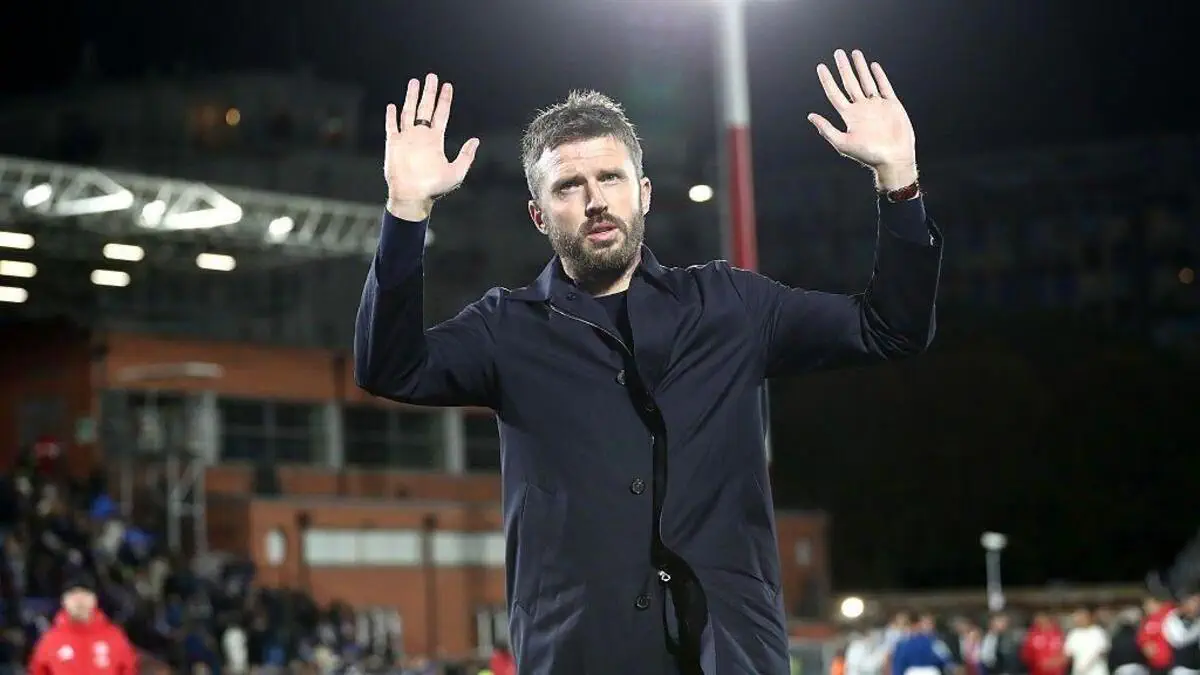
Manchester United are going through a deep crisis: disastrous results, public disagreements and questions over Michael Carrick have plunged the club into uncertainty.
Manchester United's defeat away to Como (4-1) on Wednesday, October 21, in the Champions League, did more than highlight the Red Devils' sporting shortcomings. It also exposed a rift between the senior players, the coaching staff and the directors. After Lisandro Martínez criticised the club's management, it was Bruno Fernandes who questioned the tactical choices of Michael Carrick.
Will Michael Carrick remain in charge of Manchester United?
The contrast is striking. Appointed interim manager after Ruben Amorim's departure in January 2026, Carrick had won 12 of his 17 matches and helped secure third place in the Premier League, earning a return to the Champions League. That record earned him a two-year contract at the helm of the first team.
But the momentum has changed dramatically. Since the start of the 2026-2027 season, United have recorded just two wins in eleven matches in all competitions and are on a run of seven games without a victory. The Mancunians collected only seven points from their first seven league matches, sit 13th in the Premier League and have already been knocked out of the English League Cup. In Europe, they have three points after three matches. A disastrous start given the ambitions stated this summer.
After the humiliation in Italy, Carrick described the performance as “unacceptable” and apologised to the supporters. He also stressed his players' lack of intensity, reminding them that no system could work without collective effort. His future could now be discussed by the club's decision-makers before the next league match.
On the pitch, the difficulties are not limited to a run of poor results. United are struggling to impose a consistent tempo, particularly when the opposition manages to bypass the first line of pressure. Defensive transitions then expose a back line often forced to retreat, while the attacking players find themselves isolated. Carrick must find a balance between ambition in possession and security without the ball, without making a succession of changes that could further blur the team's collective understanding.
An internal conflict laid bare
Captain Bruno Fernandes questioned the approach adopted against Como. Speaking to TNT Sports, the Portuguese midfielder criticised the lack of pressure on the ball carrier and an organisation that gave the opposition too much freedom. In his view, a team must sometimes take greater risks by pressing higher to prevent its opponent from settling into the game. He nevertheless clarified that tactical decisions belonged to the manager and his staff.
These comments came after another notable statement. On October 13, following the defeat to Atlético de Madrid (2-0), Lisandro Martínez publicly criticised the lack of reinforcements and targeted sporting director Jason Wilcox. The Argentine believed that Carrick did not have a sufficiently deep squad to compete at the highest level, particularly in Europe. He called for greater investment from the club's management, while acknowledging the players' responsibility.
Martínez subsequently met with the club's executives and apologised. This move formally helped defuse the incident, without erasing questions about the squad's depth. Fernandes' comments, meanwhile, reignited the debate over Carrick's methods. The situation does not prove the existence of irreconcilable factions in the dressing room, but it does reveal disagreements that are now being expressed publicly.
The schedule makes the situation even more delicate. The squad has little time to work on its automatisms in training. For the English coach, the urgency is as much psychological as tactical: restoring confidence before doubts become firmly entrenched.
Does Manchester United have an ideal successor?
Julian Nagelsmann and Fabian Hürzeler are among the profiles mentioned in the English press. At this stage, however, there is no indication that an agreement has been reached or that a replacement process has officially begun. A candidate's availability, playing philosophy and ability to take over during the season all represent potential obstacles.
Another potential candidate has attracted particular attention: Antonio Conte. Free since leaving Napoli in the summer of 2026, the Italian coach recently described the profile of the club he would like to manage. In an interview with The Athletic, reported by several Italian media outlets on October 5, he explained that he wanted to return to an institution with a rich history but seeking renewal: “There are many clubs that have somewhat lost sight of their history. I would like to join one of them and restore all its lustre.” He also wants to work in an environment where pressure and the obligation to challenge for the top positions are constant.
These criteria appear to match Manchester United, who have not won the English championship since 2013. Conte even said he would be ready to take over a team during the season if the project was worthwhile. Having managed Chelsea and Tottenham, the former Juventus and Inter coach knows the demands of the Premier League. His reputation as a leader, tactical discipline and ability to establish a collective framework could appeal to a club lacking direction. However, he did not name Manchester United as a preferred destination, and no agreement with the Red Devils has been announced.
The directors therefore face a choice between maintaining Carrick and giving him time to restore collective discipline, or opening a new technical cycle just a few months after entrusting him with the team on a permanent basis. In either case, the upcoming meeting with Bournemouth promises to be decisive for the club's image and the credibility of its sporting project. Beyond the manager, Martínez's criticisms are a reminder that recruitment and governance will also be judged.
Changing managers would not, by itself, guarantee a turnaround. Any potential successor would have to work with the same squad and considerable media pressure. Conversely, keeping Carrick without visible changes could intensify the criticism. The club's management must therefore determine whether the current difficulties are a reversible downturn or a deeper problem in the construction of the team.
Read also: Real Madrid: Arda Güler apologises to Mbappé


Europe
Today at 06:54

Special Reports
Today at 06:10

Europe
Yesterday at 19:57
Europe
Yesterday at 16:30
Exclusive
17 October 2026

Africa
14 October 2026
Europe
12 October 2026

Interviews
06 October 2026
Europe
05 October 2026