
The African doping trap: Talents burned by bans and those who rose from the ashes
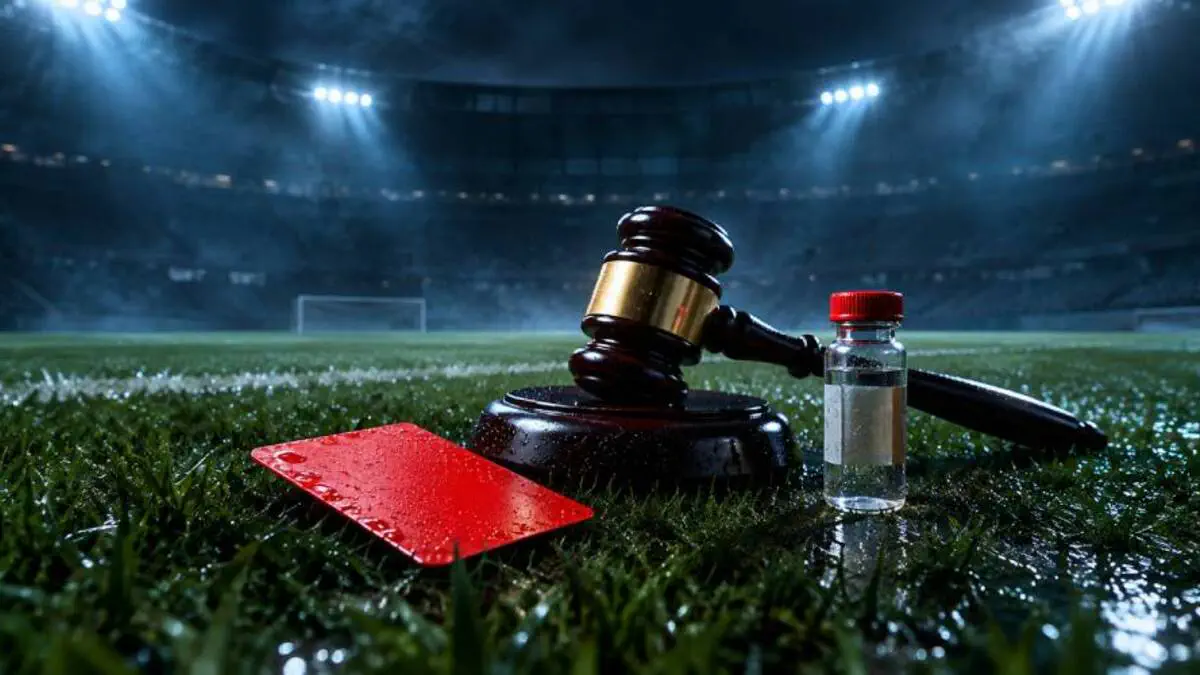
The confirmation of a four year doping suspension for Egyptian forward Ramadan Sobhi has reignited focus on anti doping enforcement in African football recalling several high profile cases where prominent continental players received severe career interruptions.
Read Also: Shock in Egypt: Pyramids player Ramadan Sobhi suspended until 2029!
Andre Onana: accidental ingestion and elite recovery
The most prominent modern African player to face anti doping sanctions is Cameroon international André Onana. In February 2021, UEFA issued a 12 month ban against the goalkeeper after the diuretic Furosemide was detected in his urine sample while playing for Ajax.
Onana maintained that he had mistakenly ingested the substance by taking a prescription pill belonging to his wife instead of standard paracetamol.
The Court of Arbitration for Sport (CAS) accepted that Onana had not acted with fraudulent intent to enhance performance, subsequently reducing his suspension to nine months.
The goalkeeper resumed his career at the highest level, eventually completing transfers to Inter Milan and Manchester United, after that moved to Trabzonspor.
Youcef Belaili: From multi-year suspension to continental champion
Algerian winger Youcef Belaïli faced a near career ending crisis in 2015 while representing USM Alger in the CAF Champions League. The Confederation of African Football CAF initially imposed a four year suspension following a positive test for cocaine.
After an appeal and a review before the Court of Arbitration for Sport, the sanction was halved to two years.
Belaili completed the suspension in 2017 and rebuilt his form through stints in Ligue 1 with Angers and the Tunisian top flight with Espérance de Tunis.
His recovery culminated in a pivotal role for the Algeria national team, helping them lift the 2019 Africa Cup of Nations title in Egypt.
Sylvain Gbohouo & Youssef Mosrati: maximum penalties and lost tournaments
Other cases across the continent carried devastating professional consequences due to timing and age. Veteran Côte d'Ivoire goalkeeper Sylvain Gbohouo received an 18 month suspension from FIFA after testing positive for the banned stimulant Trimetazidine shortly before the 2021 Africa Cup of Nations.
The ban excluded the 33 year old from the tournament and effectively closed the door on his international career with the Elephants.
Similarly, Tunisian midfielder Youssef Mosrati was handed a maximum four year ban by FIFA following a routine domestic control while at CS Hammam-Lif. Without admissible mitigating arguments or proof of contamination, international governing bodies routinely enforce the standard multi-year framework.
Strict liability and the severity of sample tampering
Doping jurisprudence enforced by the World Anti-Doping Agency (WADA), FIFA and CAS adheres strictly to the principle of "strict liability" where players are entirely responsible for substances found in their system regardless of intent.
Cases involving accidental medication errors, such as Onana's, leave narrow legal pathways for sentence reductions when clear proof is presented.
In contrast, allegations involving deliberate recreational substance use or sample tampering carry the harshest statutory penalties. A four year sanction represents the harshest non lifetime penalty available which often results in forced retirement unless successfully overturned on appeal.


Africa
Today at 17:06

Africa
Today at 09:18

Africa
Yesterday at 10:41

Africa
18 September 2026

Ballon d'Or
09 September 2026
World Cup 2026
09 September 2026

Africa
20 August 2026
Interviews
14 August 2026