
Fourteen managers gone: How the 48 team World Cup triggered a historic coaching massacre

The newly expanded 48 team format of the World Cup 2026 across North America promised more games, more representation and more fairy tales.
Instead, it has transformed into a high pressure graveyard for international managers. With fan expectations reaching a boiling point, football federations have shown zero patience unleashing a historic wave of sackings and resignations.
Senegal's Heartbreak Triggers Thiaw's Sudden Exit
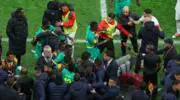
The most recent and dramatic casualty of this tactical purge is Senegal's head coach, Pape Thiaw. The Teranga Lions appeared to have one foot firmly planted in the next round holding a commanding 2-0 lead over Belgium in the Round of 32.
However, a catastrophic defensive collapse in the final 6 minutes allowed the Europeans to claw their way back to a 2-2 draw. The ultimate heartbreak was delivered in the 118th minute of extra time when a controversial Belgian penalty shattered Senegalese dreams.
The emotional fallout inside the locker room was instantaneous and severe:
"I will walk away from international football entirely if this technical staff remains in place" declared a furious Pape Gueye exposing a deep rift within the squad.
Fearing a total player mutiny and facing intense domestic media backlash, the Senegalese Football Federation acted swiftly, officially sacking Thiaw.
The Casualty List: World Cup 2026 Coaching Departures
The tactical guillotine has claimed champions, veterans and heavyweights alike. Here is the complete breakdown of the 14 managers who lost or surrendered their jobs during this volatile summer tournament:
| Manager | National Team | Elimination Stage | Departure Status |
| Sabri Lamouchi | Tunisia | Group Stage (Matchday 1) | Fired (Following 5-1 loss to Sweden) |
| Steve Clarke | Scotland | Group Stage | Resigned |
| Miroslav Koubek | Czech Republic | Group Stage | Resigned |
| Hong Myung-bo | South Korea | Group Stage | Resigned |
| Marcelo Bielsa | Uruguay | Group Stage | Resigned |
| Hervé Renard | Tunisia | Group Stage | Resigned |
| Sebastián Beccacece | Ecuador | Round of 32 | Fired |
| Ronald Koeman | Netherlands | Round of 32 | Fired |
| Julian Nagelsmann | Germany | Round of 32 | Fired |
| Javier Aguirre | Mexico | Round of 16 | Resigned |
| Carlos Queiroz | Ghana | Round of 16 | Fired |
| Roberto Martínez | Portugal | Round of 16 | Fired |
| Zlatko Dalić | Croatia | Round of 16 | Fired (Following defeat to Portugal) |
| Pape Thiaw | Senegal | Round of 32 | Fired |
The Unforgiving Reality of the Expanded Era
This unprecedented coaching massacre highlights a fundamental shift in modern international football. Historically, reaching the first knockout round was considered a respectable benchmark for mid tier footballing nations. However, the introduction of the Round of 32 has completely altered the risk matrix for elite federations.
Crashing out in an early knockout stage, or failing to escape a diluted group stage, is now classified as an unmitigated disaster. When European giants like Germany, the Netherlands and Portugal fail to reach the quarter finals, the commercial and cultural fallout is too massive for boardrooms to ignore.



Africa
Today at 15:37
Africa
Yesterday at 15:30

Europe
Yesterday at 14:15

Europe
Yesterday at 08:38
Europe
Today at 10:00
World Cup 2026
Today at 03:27

Europe
Yesterday at 06:58

Africa
14 October 2026

Africa
14 October 2026

Europe
12 October 2026
Interviews
06 October 2026
Europe
05 October 2026
Interviews
01 October 2026